viernes, 20 de julio de 2018

9 Reasons to Visit Thailand in 2018

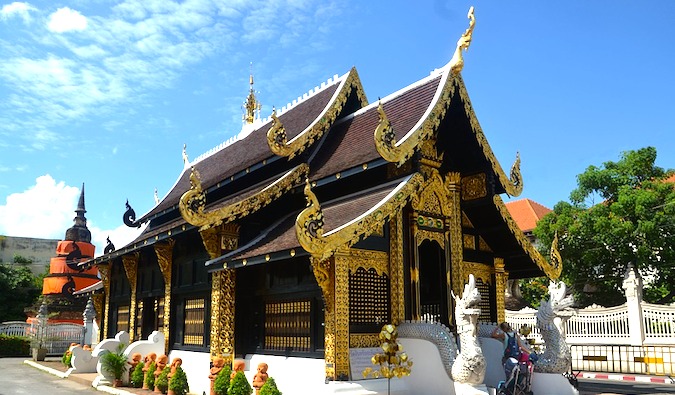
Temple in Chiang Mai
Updated: 7/20/2017 | July 20th, 2018

Thailand is one of my favorite countries in the world. Going to Thailand is like going home. That sense of energy, of adventure, of hectic cities. I love it. I love the sense of wonder. The knowing that anything can happen.

I’ve been visiting for over a decade, and I’m always amazed by it. Every visit reminds me how much I love it, lets me learn more about the culture and discover new and exciting things to do. The country is so big that it would take a lifetime to really see it in depth.

I want to share with you what makes Thailand so special to me and give you a little overview of the best things to do and see there — no matter how long your visit is!

Experience Bangkok’s chaotic nature
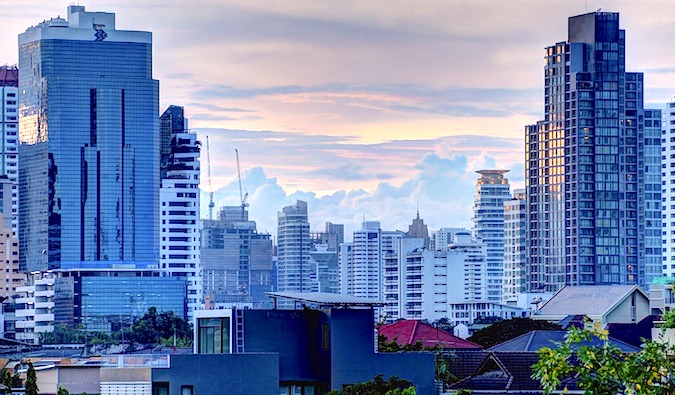
Bangkok skyline
The capital of Thailand, Bangkok, is a crazy city that moves at a lightning-fast pace. I didn’t like it when I first visited: the noise, crowds, heat, pollution, and seemingly endless number of people — it was all too much. But after living there, I saw how wonderful the city really is.

Bangkok is like an onion. There are lots of layers, and the best are far from the tourist haunts. They are the little places you only find if you live there (or read this blog!). In Bangkok, there is always some event being held; the food is incredible whether it’s from a street stall, market, or high-end restaurant; the parties…well, one night in Bangkok is like nothing else; the locals are very friendly; and, because of all the travelers and expats living here, it’s a very international city. You’ll never be bored here.

Related articles:

Visit one of the many tropical beaches
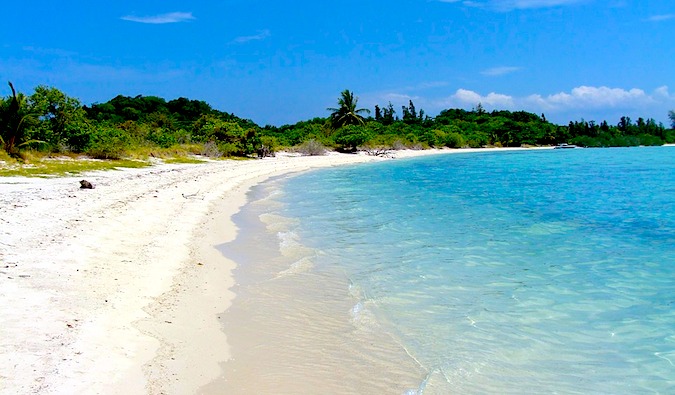
gorgeous blue waters of one of the many beaches in Thailand
Thailand’s beaches and islands are some of the best, most photographed, and most beautiful in the world. A picture’s worth a thousand words, and this photo proves why you should visit Thailand better than any words I could say. There are islands for all needs: party islands, resort islands, dive islands, chill islands, empty islands filled with a few huts and not much else… islands with resorts, yoga retreats, or waterfalls, and some that mix a little bit of everything! With more than a thousand islands to choose from, you are going to find something that suits your needs.

My favorite islands in Thailand are Ko Lipe, Ko Lanta, Ko Samet, Ko Phangan (where you’ll find the famous Full Moon Party), Ko Jam, and Ko Maak.

Related articles:

Trek the tropical jungles
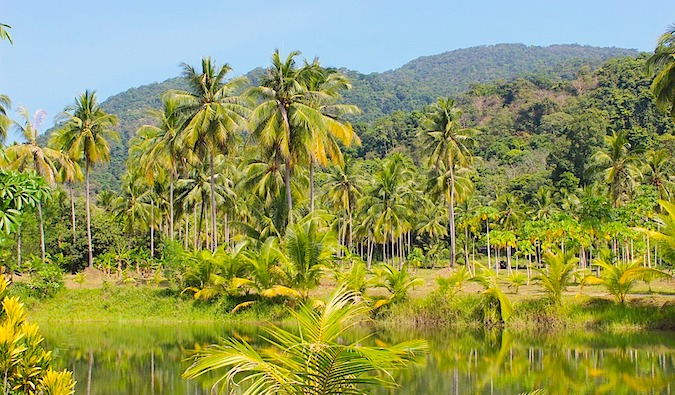
Jungle in Thailand
Trekking in northern Thailand offers wildlife, hill tribes, great views of the lush tropical jungles, and an appreciation for the landscape. Thailand is awash with tropical jungles filled with wildlife; these make for great day trip or multi-day trekking opportunity that will give you a sense of the rich biodiversity of Thailand! There’s nothing like trekking through a tropical jungle to nurture your inner explorer. Some of the best trekking can be found way up north near Chiang Rai, in Khao Yai Park (where you can see wild elephants), and in Khao Sok, which is famous for its caves and limestone.

Related articles:

Volunteer with elephants
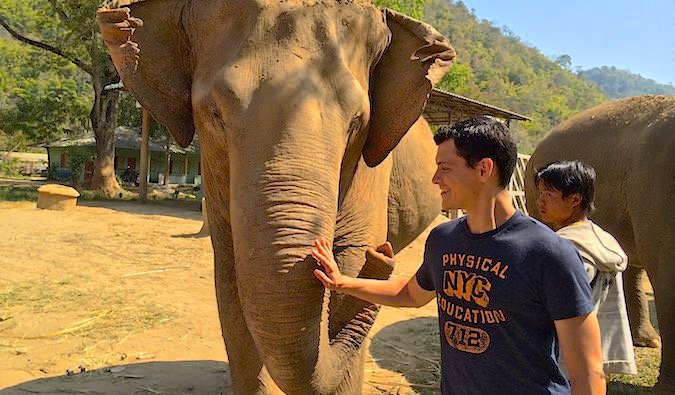
Nomadic Matt Kepnes playing with a Thai elephant at the Elephant Nature Park
From fish in the sea to elephants on the ground to birds in the air, Thailand has a wide variety of animals. Most people come here to go diving and see tropical fish, but there are plenty of great creatures to see on land and in the air, too, especially if you like birds. Exploring the jungles in parks like Khao Yai or by diving in Ko Tao is a great way to see all the main species. Another thing you can do is help save elephants from abuse by working at the conservation camp near Chiang Mai. Elephant riding has led to a lot of abuse, and now there are a number of animal-friendly sanctuaries where you can see the elephants up close, feed them, and take care of them in a manner that’s a win for everyone involved.

Related articles:

Eat delicious food
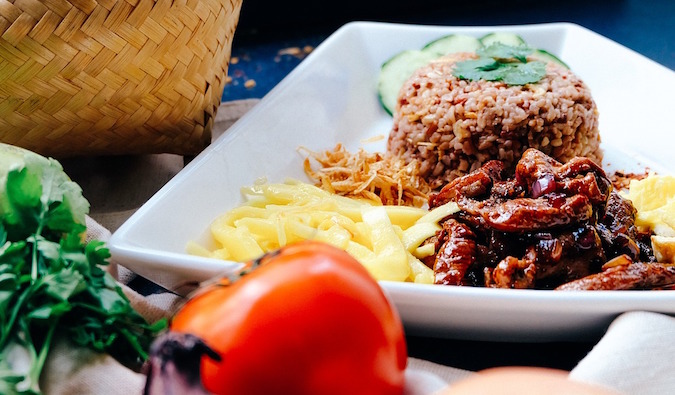
yummy fresh Thai Food
Thai food is known around the world to be delicious, and you can bet it’s even more delicious in Thailand. The best food comes from the street vendors, who serve up the tastiest, spiciest food in the country. Just find the stalls where the locals are crowding around to get the best of the best.

Thailand without the food would be like France without the wine. I highly recommend the pork noodle soup. It’s one of the few Thai dishes you won’t find elsewhere in the world. Other awesome dishes to try: khao soi, pad kra pao, som tam, laab, and endless amounts of mango sticky rice.

Related articles:

Explore the historical capitals
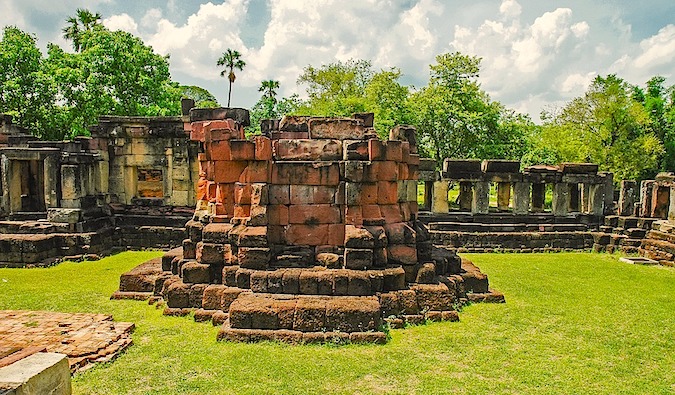
Temple ruins in Korat
The massive archaeological sites of Sukothai, Lopburi, and Ayutthaya are windows into Thailand’s historic past, with ruins dating back centuries. These ancients cities were Thailand’s capitals during Khmer, Burmese, and local Thai kingdoms. These cities dot the center of Thailand, so they’re a perfect way to hop, skip, and jump your way to Chiang Mai and see the rural countryside. Additionally, you can find smaller ruins in Isaan on the way to Cambodia, also built in Khmer style.

Related articles:

Enjoy the great diving
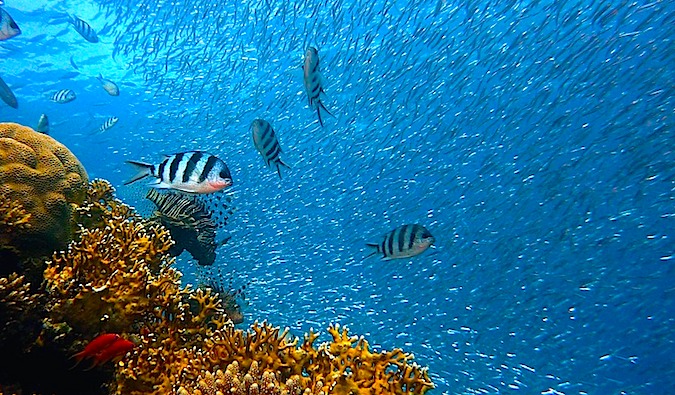
Diving with fish in the dark blue waters
Thailand has some of the best dive sites in the world, and it’s also one of the cheapest places in the world to learn to dive. The diving near Phuket, Ko Tao, the Similan Islands, and the Surin Islands is famous for brightly colored fish and coral. I find the diving near Ko Lanta and the Similan Islands to be the best as the reefs are better preserved.

Related articles:

Explore Isaan
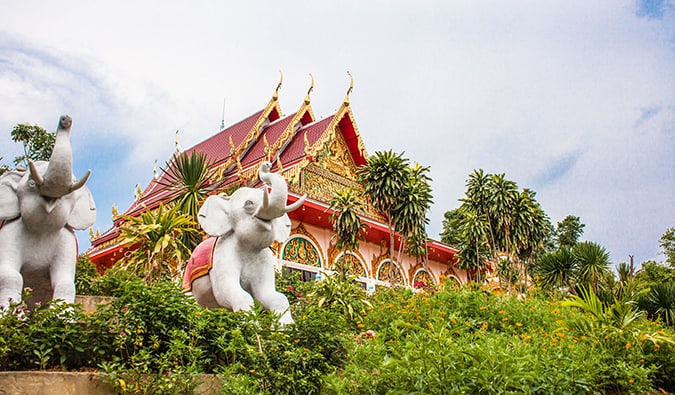
a temple in Isaan, Thailand
If you really want to see what Thai life is like outside the big cities, visit Isaan, the northeastern part of Thailand. It is extremely rural and contains small villages, parks, and ruins that hardly see any tourists. There were entire days I never saw another foreigner. I think it’s one of the most interesting areas in the country and gives you a true sense of Thailand away from the crowds. Isaan food is also a regional version of Thai food that is probably the best (and spiciest).

Related articles:

Take a cooking class

cooking up some Thai food
You’ll find cooking classes all over Thailand, though Chiang Mai is the most popular place for them. Typically, you begin your class by going to the market and learning about Thai produce before heading to the kitchen. These hands-on classes teach you how to make your favorite Thai dishes; at the end, you’ll be able to eat your creations, so come hungry! (Just don’t try to eat my food. My curry never came out right.) Any guesthouse or tour agency can help you arrange a class.

Related articles:

***

And this is really just the tip of the iceberg. Thailand has a lot to offer travelers. There are plenty of good reasons to visit Thailand now and tons of things to do here.

NEW UPDATED EDITION!! Get all my best Thailand tips!
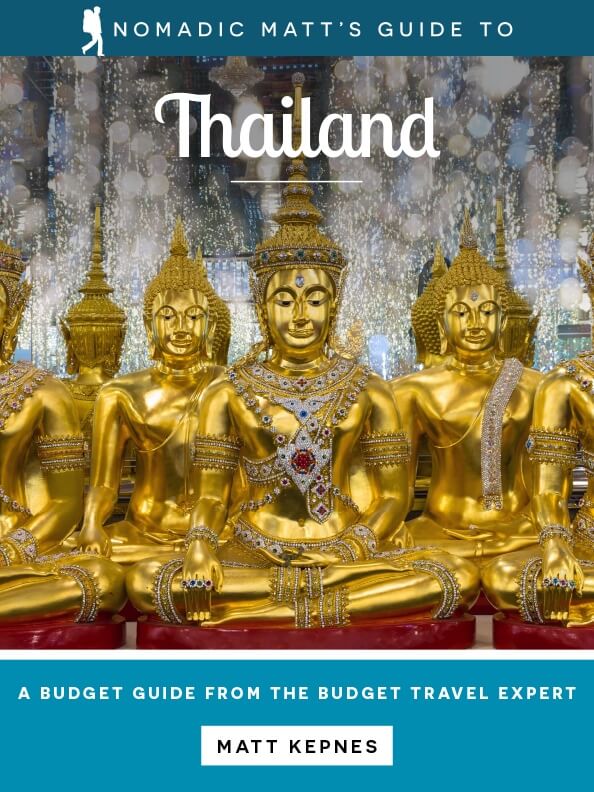
Recently, I just released a massive update for this guidebook. You’ll find NEW suggested itineraries, budget tips, ways to save money, on- and off-the-beaten-path things to see and do, and non-touristy restaurants, markets, and bars. In this edition, we also urevamped and expanded our information on the islands, added a section on Kanchaburi, and added TONS of maps to help you get around the country, plan your itinerary, and find your way around cities.

Just click here to learn more about the book and get it today!

Photo credits: 10

The post 9 Reasons to Visit Thailand in 2018 appeared first on Nomadic Matt's Travel Site.


July 20, 2018 at 02:48PM

fom https://ift.tt/2Nwbt7v
by IHholiday Travel trip

jueves, 19 de julio de 2018

8 Ways to Stay Motivated to Travel

how to stay motivated to travel
Updated: 7/19/18 | July 19th, 2018

Motivated people can achieve anything they set their mind to. But how does one stay motivated, especially to travel, when you are busy working and living life while your family and friends disparage your ideas, you’re overwhelmed planning your trip, or maybe just burnt out from being on the road already?

Motivation is not an unlimited wellspring but a battery that has to be kept fully charged. While the idea of travel is always inspiring, sometimes life gets in the way and then suddenly, your eyes are no longer on the prize.

Travel can be frustrating.

I’ve had my share of ups and downs. My trip to Iceland has been years in the making. I always talk about it but it kept getting delayed because “stuff came up.” It wasn’t until I finally said “enough” and booked my ticket right there that the trip became a reality. Years ago, burnt out, I went to Cambodia to recharge my batteries. I stayed in one place and watched movies and read books. Alone. It was relaxing, and one day I woke up and said “I’m ready to go again.”

When you plan your trips, you don’t think about the long boring hours on a bus, the delays, the annoying airports, dealing with snorers in hostel dorms, fending off tours and scammers, and all the other things that will suck the energy and joy out of your experience.

It becomes stressful to restart your life every day in a new place with new people. As the months go by, you find you want a hot shower, nice bed, no snorers, someone to fully understand the words you are saying, and someone to stay longer than a day.

Eventually, you need to stop and recharge your batteries. To is stay in one place, watch Netflix, and relax. You begin to crave the monotony of the life you ran away from!

It’s important to find ways to stay motivated, and, so today I wanted to share my eight tips on how to stay motivated to travel:

1. Hold yourself accountable

The best thing you can do to stay focused is to be held accountable. Being accountable to others will help make sure that you don’t fall off the wagon. They will help keep you focused on your goal, and the social pressure to stay on track will provide some extra motivation to follow through. Whether that is betting money, having someone check in on you, keeping track of goals, or having someone help you plan, just being held accountable will force you to stay focused, even on those days you don’t feel like it!

We have a great group of people on the community forums that can help cheer you on toward your goals. Or use an anticharity like Stickk, which will donate money to your most hated cause if you don’t follow through.

Accountability ensures action and can force you to follow through when a lack of energy would otherwise hold you back.

Related Posts

2. Research places to go

Keep reading about places you want to visit and eventually you’ll get there. It may sound trite, but by always keeping travel on my mind, I always am excited about my future trips. I’m constantly researching destinations online, reading news from overseas, looking up flights, reading blogs, and generally getting to know the world better. The more I learn about different places, the more I think, “There are so many places to see, and no time to waste! Let’s go book a flight!”

how to stay motivated to travel

Thinking about doing something all the time will make it happen.

Related Posts

3. Devote time

Stuff always seems to come up, doesn’t it? Sure, I was planning to visit Iceland in May and then suddenly, May was here and I was busy. Or maybe you decide today’s the day you’re going to plan your trip but then you forget you have laundry to do. My solution? Pick a day and time you are normally not busy (i.e., on Facebook) and devote that time to planning your trip. Make it a consistent part of your schedule and develop a habit so that it doesn’t feel like a task you “have” to do; it becomes just something you do automatically.

Set thirty minutes aside each day to focus on travel or to plan your trip. Turn it into part of your everyday routine.

4. Read travel blogs

Reading about other travelers’ adventures can show you that it is easier to travel than you thought, provide advice and tips on the art of travel, and teach you about places you’ve never heard of. One day you’ll get sick of living vicariously through others, and you’ll go out and create your own travel stories. They will show you that yes, travel is realistic, practical, and financially possible.

Here is a list of my current favorite travel blogs!

5. Read travel books

I just finished Turn Right at Machu Picchu by Mark Adams. After reading about his epic adventure through Peru, I am so motivated to see Peru that I’ve already ordered a guidebook to the country. Peru! Peru! Peru! While reading travel blogs is great, travel books are even better because they cut deep into a destination and open it up in a way a short blog post can’t.
how to stay motivated to travel

And in that same vein, be sure to read books about the destination you are visiting so you can get a deeper understanding of the place. You can’t understand a location’s present if you don’t understand its past.

Related Posts

6. Learn a language

Join a class and pick up a language you might use on the road. Once you’ve started learning the language, you’ll hate to waste your new skill. And the only way to use it is to travel to where they speak it! Here are some blog posts from language experts I know to get you started:

7. Take a break

If you’ve been on the road for a while, you’ve probably burnt out a bit. Travel isn’t always rainbows and unicorns, and spending a lot of time on the road can lead to burnout. That’s going to sap your motivation and might even have you thinking about home. It did for me once (I got burnt out on my first trip and went home early), and the second I got home I face-smacked myself and said, “What was I thinking!” I learned my lesson and found that a much better way to get your mojo back is to take a break. Instead of moving on to your next destination, stay where you are for as long as you need. Watch TV, volunteer, work at your hostel, start a blog, or sit by the beach everyday — whatever relaxes you.

8. Meet other travelers

Sometimes it can be hard to stay motivated if the people around you aren’t supportive of your desire to travel. Hanging out on travel forums or our Facebook travel group the naysayers who don’t believe long-term travel is possible because you’ll see from all these people encouraging you that it really is.

An encouraging environment is a better environment! And a community of travelers telling you aren’t crazy and this is possible will drown out all the naysayers in the world.

***

If you’re like me, you go through bouts of motivation. You get super excited about a trip and then your mind moves on to something else, or the challenge of planning saps some of your motivation and you put it off until later.

But there’s only today, so use these tips to help stay motivated about your next trip.

Because one day, you’ll run out of tomorrows.

How to Travel the World on $50 a Day

how to travel the world on $50 a dayMy New York Times best-selling paperback guide to world travel will teach you how to master the art of travel save money, get off the beaten path, and have a more local, richer travel experiences.

Click here to learn more about the book, how it can help you, and you can start reading it today!

The post 8 Ways to Stay Motivated to Travel appeared first on Nomadic Matt's Travel Site.


July 19, 2018 at 02:00PM

fom https://ift.tt/2LwDZpb
by IHholiday Travel trip

miércoles, 18 de julio de 2018

How NOT to Feel Overwhelmed

feeling overwhelmed by planning
Updated: 07/17/18 | July 17th, 2018

Planning a trip can be stressful.

Where do you start? What should you do first? What’s step two? Will everything work out? Is there a best route to take? There’s a lot to think about!

Taking time off and traveling around the world is a big life change, and it’s easy to feel overwhelmed. Multi-month trips just don’t happen. There’s a lot to do to make your dream a reality.

And your list of things to do can seem endless.

So how do you manage to stop feeling overwhelmed? How do you get over the anxiety of not knowing where to begin?

It’s easy — and I’ve developed a unique four-step process to doing so (patent pending):

First, buy your plane ticket to where you want to go first. (Not sure where you want to start? Simple. Start where the airfare is the cheapest.)

Second, turn off the computer and stop visiting 93,754,302,948,320 websites about travel (except for mine — you should always read mine!). You’ll suffer from information overload if you don’t.

Third, go out with your friends and celebrate the start date of your trip.

Fourth, smile.

There – that’s it. You bought your plane ticket. You’re going. There’s no turning back. There’s no need to worry anymore. All other planning is secondary.

I once heard at an industry event that people will look at up to 20 websites over the course of 40 hours while researching their trip.

TWENTY WEBSITE AND FORTY HOURS!

That’s before they even book anything!!!

No wonder I get so many emails from people saying “Matt, I feel like I’m in over my head.”

Information is power, but in our information-overload society, too many resources leave us conflicted and powerless.

I understand you might be feeling a lot of anxiety planning your trip since you want to make sure everything goes right. I remember what it was like when I was planning my first trip. I had every guidebook under the sun in my room. I created spreadsheets. I researched everything. I had multiple itineraries drawn up. I had lists upon lists. I was constantly worried about having “the perfect trip.”

I’ve been there and I understand, but I can tell you from years of experience that the more you plan your trip, the more anxiety you will face. You’re going to overwhelm yourself with so much information that you’re going to do nothing but stress over it.

Planning gives you a sense of ownership over your trip. There’s joy in it. It’s one of the best parts about travel.

But overplanning will lead to stress, and I can tell you from past experience that your plans will change anyway.

Someone will tell you about a new destination and you’ll race off there instead of going to Amsterdam.

You’ll wander the streets and into unexpected restaurants.

You’ll meet a group of people who will convince you to stay on that tropical island with them just a little longer.

In short, plans change, so don’t go overboard. Have a general idea of what direction you want to go, plan your first few stops, and then just let the wind take you.

Don’t make yourself a lengthy plan. You won’t follow it anyway.

In 2006, my first itinerary through Europe was supposed to look like this:

Oslo –> Prague –> Milan –> Florence –> Rome –> Naples –> Corfu –> Metorea –> Athens –> Greek Islands –> Athens

But it ended up like this:

Oslo –> Prague –> Milan –> Florence –> Rome –> Venice –> Vienna –> Amsterdam –> Costa del Sol -> Barcelona -> Amsterdam –> Athens

Almost nothing worked out as I had planned. It worked out better. Cooler, more interesting things and people pulled me in a different direction. My recent trip to Southeast Asia was completely changed when a friend said “Want to come meet me in Chiang Mai?” Instead of flying to Bangkok, I ended up in Chiang Mai and then onward to Laos!

I have rarely ever kept my original plans. I don’t know many travelers who have.

After you’ve booked your flight, come up with a list of everything you need to do before you go (it won’t be as long as you think) – buying your backpack, purchasing travel insurance, get your visas if needed, getting new bank cards, booking a hostel, canceling cable, etc., etc. Most of this stuff can be done a few months before you go.

Go down your list.

Check.

Check.

Check.

Buy a book or two to pick up some general knowledge on how to travel and prepare for your trip. Read a guidebook and get a good idea about where you’re going. Develop a general plan and then fill in the details along the way.

You can’t really know what you are going to do in a destination before you get there. Read up the guidebook on your flight because that’s when it matters.

You can’t do or change anything until you start your trip and the pre-trip stuff takes far less time than you think.

Breathe.

Relax.

Everything will work itself out.

And, when it does, you’ll wonder why you stressed so much in the beginning.

Related articles:


How to Travel the World on $50 a Day

how to travel the world on $50 a dayMy New York Times best-selling paperback guide to world travel will teach you how to master the art of travel save money, get off the beaten path, and have a more local, richer travel experiences. Click here to learn more about the book, how it can help you, and you can start reading it today!</ Photo Credit: 1

The post How NOT to Feel Overwhelmed appeared first on Nomadic Matt's Travel Site.


July 17, 2018 at 07:01PM

fom https://ift.tt/2NXDRR8
by IHholiday Travel trip

How an Airline Plane is Built

Updated: 07/17/18 | July 17th, 2018

Though I’m terrified of flying, the experience also thrills me. There you are, cruising in a metal tube at 37,000 feet while watching a movie, texting your friends, and — if you’re a travel hacker (and you should be) — enjoying fine food and liquor.

I can never get over the fact that planes, which can weigh up to 485 tons and contain, like, up to 6 million parts, can even get into the air — and stay there! Yes, I know all about aerodynamics (“it’s just lift!”), but it’s still so damn cool!

So when I was invited to my first aviation press event at the end of March, I was beyond excited. I don’t get a lot of media invites since I don’t report on breaking industry news, but when I was asked if I wanted to tour the Boeing facility in Charleston, South Carolina, as part of Singapore Airlines’ 787-10 launch, I immediately said yes.

Watch a plane get built? Fly a flight simulator? Yes. Yes! YES!

At the Boeing plant, we were treated to tours of the Dreamliner assembly process. We went to the production facilities where, after a long and boring press conference on flight specs and fuel savings, we finally got to go down to the factory floor to see the good stuff. Walking on the floor and seeing these metal behemoths really gave me a sense of wonder and awe.

Like, “Damn, that’s a plane!”

Before this, I had only a rough idea of how planes are built, how engines work, and the complicated manufacturing process that’s required to put it all together. I mean, I’ve watched a few documentaries on flying. But unlike most of the other aviation press there, I couldn’t tell one plane or engine from another, discuss avionics or contracts between suppliers, or who designs what seat fabric.

So I was excited to learn about the factory assembly process and how a plane becomes a plane.

At the plant, there are three areas to the plant: rear body, midbody, and final assembly.

The rear body process is where the tail of the plane is made, and the Charleston plant makes all the tail sections for all the 787 Dreamliners (minus the fins). One thing I did know before this trip was that they use carbon fibers, which have several advantages over traditional composite metal, including high tensile strength, low weight, high chemical resistance, high-temperature tolerance, and low thermal expansion. Basically, they are stronger and lighter than traditional metal. They take a tacky composite carbon fiber tape and spin it together around a shell to make the tail sections, called Section 47, where the passengers are (Why Section 47? No one knows. There aren’t actually 47 sections to the plane. That’s just what they call it!), and Section 48, which is the very end of the plane, where the fins will be attached. It’s kind of cool to think about. When you fly a 787, you’re basically flying a plane that mostly started as a thread. Science, man, science!

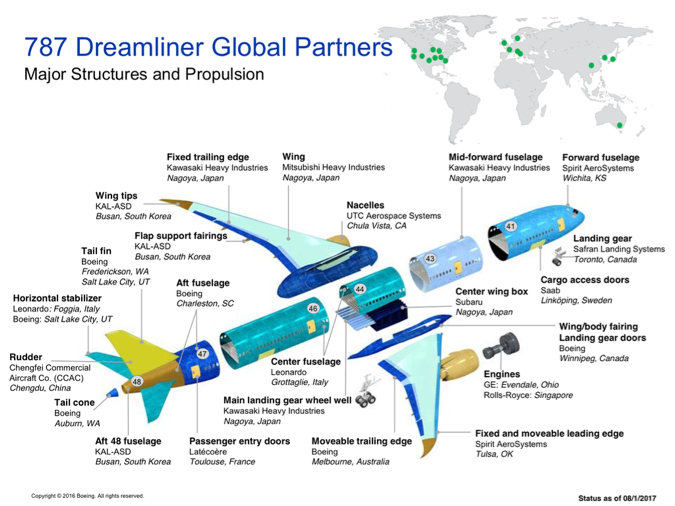
All the other parts of the plan are built elsewhere around the world and then flown in on this weird-looking plane called the Dreamlifter: part of the front of the body (called the forward fuselage) is built in Wichita, Kansas; another part of the forward fuselage is built in Kawasaki, Japan; the center fuselage is built in Alenia, Italy; and the wings are built in Japan, Oklahoma, and Australia. Here’s an image Boeing gave me to give ya an idea of how global Dreamliner production is:

a graphic of how a plane works

During the midbody process, some of the electrical systems and ducts are added to the plane. They also “snap” together the fuselage sections that are flown in from around the world. Basically, there’s a thin lip in each of the sections, and a machine use fasteners to put them together, which is both exciting and considerably unnerving to see because you realize just how amazing it is that it takes so few parts and how few things are holding this places together. For example, they have just seven rivets that snap the wing to the plane (later, during final assembly) and hold all that weight. Nope, they aren’t welded together. It’s like an oversized Lego set!”

Watching them put the fuselage together this was the most interesting part of the plant didn’t allow photographs, which was a shame. But, since Sam Chui is a badass aviation blogger, they gave him access to film it, so watch this video:

From there, it’s on to final assembly where, over the course of seven stations, all the sections are lined up and put together using a “just in time” factory model. It’s here the wings and engines get put on, the interiors are added, the plane is turned on for the first time, systems are tested, and the finished aircraft is driven out of the hangar for test flights.

This final assembly takes approximately 83 days.

Kinda crazy, huh? You never realize just how much goes into a plane. It’s quite impressive that such a coordinated, global operation can produce such a finely tuned piece of machinery that can essentially fly forever with proper maintenance.

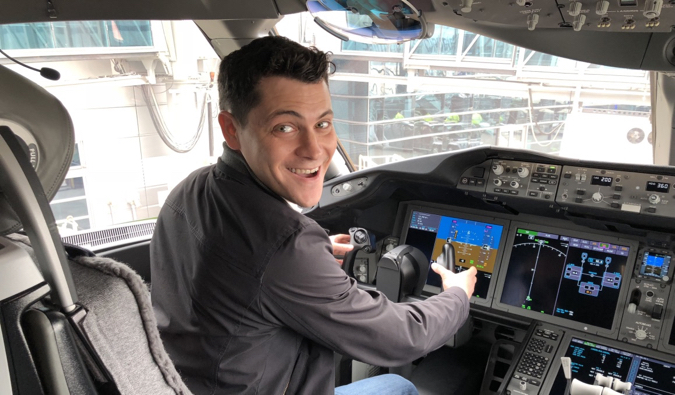
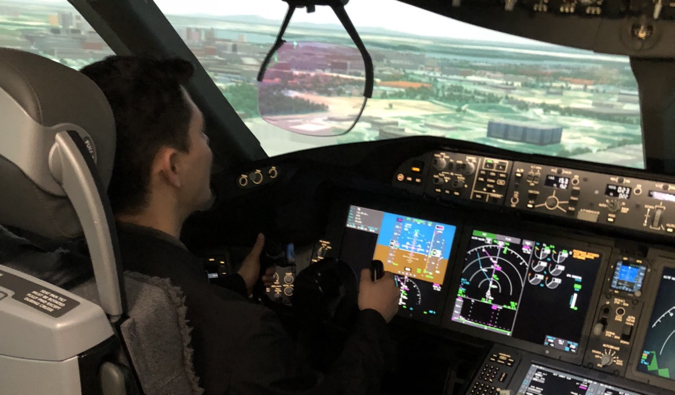
Then, after a 24 hour flight to Singapore, we were taken to where Singapore Airlines trains its crew in safety and service and, while I found it pretty interesting, the real fun was flying a 737 flight simulator back at the Boeing office in town. These multimillion-dollar machines simulate the full motion of a flight. After a brief demonstration, each journalist was allowed a few minutes to “fly.” I giddily sat down in the chair as the pilot let me cruise around for a bit.

I was like a kid in a candy store.

“Can I bank? Can I land? Let’s do a takeoff!” I exclaimed.

“If we have time, we can go again and I’ll release the autopilot,” the instructor coolly said after my thirty seconds was up.

Luckily, we did have time.

“Ready?” he asked as I stepped back into the seat.

“YES!”

We started in midair, he released the controls, and I flew around a simulation of Singapore for a bit.

“Not bad,” he said. “Ready to land?”

“Sure, but can we do a go-around?”

Taking the controls, I aborted my landing, turned up, and banked left so we could do one more circuit. Just as I was enjoying the bliss of the computer-generated scenery, I crashed!

I had forgotten to look at the screen and see my altitude, so while I thought I was just going left, I was actually banking down — and boom! We died.

I guess I won’t be a pilot anytime soon. There is a surprisingly large number of controls and numbers you need to pay attention to on a modern aircraft, especially when you release the autopilot!

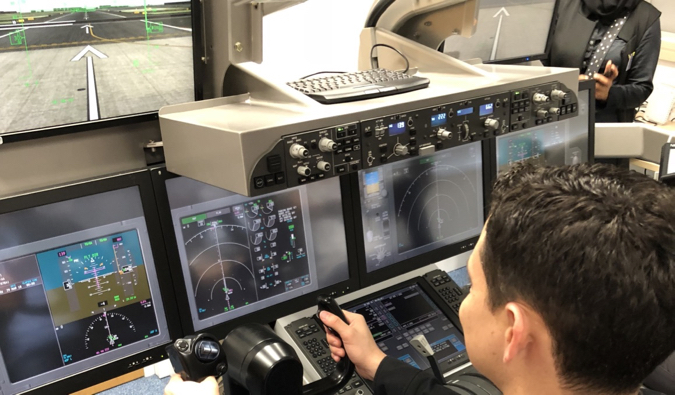
Afterward, we got to go into another simulator that allowed pilots to practice takeoffs. It wasn’t a full-motion simulator, but it was designed to get you to take off and feel the movement of the controls.

This time, I successfully, took off and no one died. So you’re safe with me!

***

For a long time, I’ve been terrified of flying — and watching a plane get built and learning about aviation did nothing to assuage that fear. I’m still unnerved by every little bump (the flight I am currently writing this on has been nothing but bumps!), but I have a new appreciation for how complex and strong planes are, how many safety systems are built into them, how hard it is to fly one, and just how damn amazing it is we live in the age of jet travel!

Editor’s Note: I was a media guest of Singapore Airlines and Boeing for this event. They covered all my expenses during these press days.

The post How an Airline Plane is Built appeared first on Nomadic Matt's Travel Site.


July 18, 2018 at 03:00PM

fom https://ift.tt/2uJVHhQ
by IHholiday Travel trip

martes, 17 de julio de 2018

How to Conquer the City of Berlin: A Visitor’s Guide

How to conquer Berlin
Updated: 07/17/18 | July 17th, 2018

Berlin is a gigantic city. I knew it was big, but until I decided to explore it by foot, I never knew just how big. I came here for five days with the idea that I’d see all the major sights, some of the not-so-major sights, and get a feel for the city. I didn’t get a chance to see much of Germany’s capital the first time I was here, and I was hoping this visit would correct that.

But despite my intentions, I barely accomplished anything in five days. Berlin is just too big and spread out. My original purpose was to write a post on what to do in five days in Berlin. But after realizing how hard it was to get around and see the sights, that post was impossible to write. This city is just too overwhelming.

So instead, here are some ways you can avoid my sightseeing mistakes, maximize the time you have in Berlin, and make the most of your visit:

General Tips for Visting Berlin

Biking in Berlin, Germany is easy and cost effective
Rent a bike – Walking around Berlin takes (and wastes) a lot of time. However, the city is a great place for a bike ride. There are separate lanes for cyclists, so it’s easy to ride without the fear of getting hit by a car. Most residents bike around the city, and while I was a bit nervous when Uncornered Market first suggested it, by the end of the day I was really happy to be biking around Berlin. It provided a fast and easy way to get around, and bikes cost around nine euros per day to rent.

Take a bike tour – If you’d rather not cycle the city alone, try a bike tour. You’ll get all the benefits of exploring on bike that I just mentioned, plus the added bonus of having an expert local guide lead the way and tell you all about Berlin’s history, culture, and food. Some suggested companies are Fat Tire Tours, Berlin Bike Tours, and Berlin on Bike.

Do it in sections – I found out just how huge Berlin is when I tried walking between sights and subsequently spent the majority of my day just getting from Point A to Point B (which isn’t bad, but it wasn’t planned for). Break up the city into various areas, and then work from area to area. It will make conquering the city much easier.

Take a free walking tour – New Europe runs a long and informative walking tour that begins at the Brandenburg Gate and lasts 3.5 hours. It takes you through the center of the city, shows you all the highlights, gives you some history, and will help you orient yourself. Other great companies are The Original Free Berlin Tour and Free Tours by Foot.

Eat cheap – You can judge a city on how cheap it is by the food, and the food in Berlin is incredibly cheap. And not just street food (you can find currywurst everywhere!), kebabs, and quick pizzas, either — even the restaurants here are a bargain. You can find a lot of meals for less than five euros. I highly recommend eating at Mustafas. It’s known for the best kebabs in Berlin. The exaggerations are true — the lemon, the mint, the fresh vegetables! Mouth watering.

For another cheap eat, check out Thai Park (Preußen Park). During the summer, Thai locals will come to the park and cook up some delicious and cheap Thai food. It started as just a small Thai community gathering but it’s now a huge food market where you can get awesome eats for under €10.

My Must-See/Must-Do List for Visting Berlin

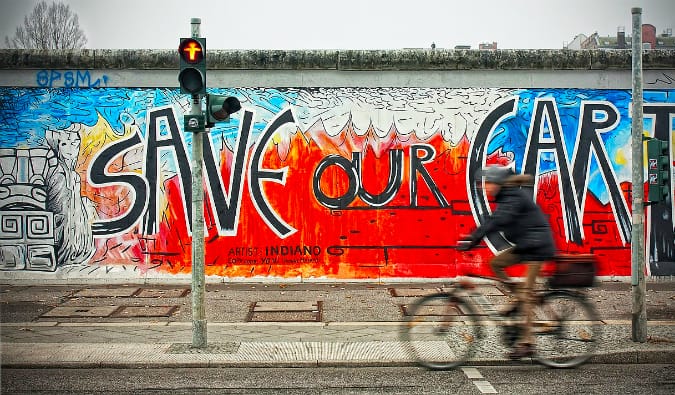
The East Side Gallery in the city of Berlin, Germany

East Side Gallery
A giant section of the Berlin Wall was left standing, and artists were invited to paint a section of it that represented hope and violence. Now, the East Side Gallery is one of the best outdoor art exhibits in Berlin. I was really moved by some of the paintings.

Muehlenstreet 6, +49 172 3918726, eastsidegallery-berlin.de. Entry is free.

Jewish History Museum
Jews have faced a long and hard road in Germany. They represented an important part of the population even though they were highly discriminated against. This museum traces the arrival of Jews and their contributions throughout German history, as well as the hardships they faced. It doesn’t go into much depth on the Holocaust, as there is a wonderful separate museum for that. But like all museums in Germany, this is huge and will require a few hours to properly explore.

Lindenstreet 9-14, +49 30 25993300, jmberlin.de. Open daily from 10am-8pm. Admission is 8 EUR. 

The Holocaust Memorial
A photo of the Shoah Museum in Berlin, Germany
Located in Mitte near the Reichstag, the Holocaust Museum (officially called “The Memorial to the Murdered Jews of Europe”) chronicles the Nazis’ treatment and extermination of the Jews. The memorial is made up of concrete slabs designed to create a feeling of confusion and unease as you wander through them. Below is a museum that follows various families through the Holocaust. It creates a very personalized and moving way to learn about this awful blight on human history.

Located near the Brandenburg Gate, +49 30 2639430, holocaust-mahnmal.de. Entry to the memorial is free.

Treptower Park
A beautiful view of the Trep Tower Park in Berlin, Germany
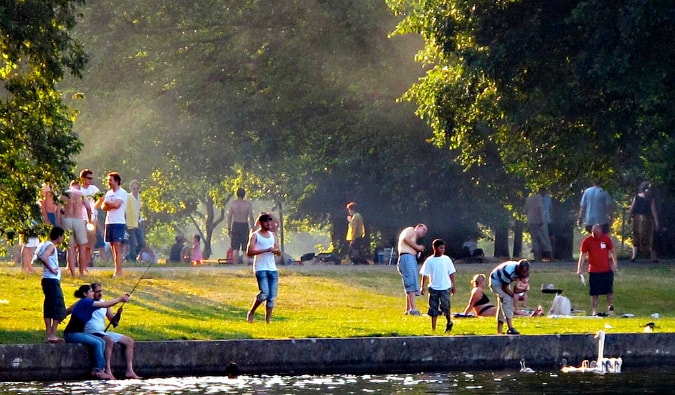
Located in the eastern part of Berlin, this park is near an old abandoned amusement park (which you can also visit). It’s a popular place to bike around, and there are a number of beer gardens and a small island nearby where they have a weekend flea market. Moreover, you can rent boats and canoes and cruise the adjoining river.

Alt-Treptow, +49 30 25002333. Open 10am-1am.

Templehof Park
Located in the southern part of the city, this park is actually the site of the old airport used during the Berlin Airlift after World War II, when the Soviets tried to blockade Berlin. Now, it’s a big park with a lot of plaques and information about the old airport. It’s not the best park in Berlin, but it’s cool to be able to walk around a piece of history.

Ehemaliger Flufhafen Tempelhof, +49 30 7009060, tempelhofer-park.de. Open 6am-10:30pm. Entrance is free. There are official tours in English every Saturday at 3pm and Sunday at 2pm for 12 EUR. 

German History Museum
Germany has a very long history, and this museum provides a detailed account of the country, starting from Roman times. It’s organized by time periods and has lots of artifacts. It’s giant, though, so if you visit, make sure you can plan to spend at least two hours here. Skip the audio guide, though; I didn’t find it to be that good.

Under the Linden 2, +49 30 203040, dhm.de. Open daily from 10am-6pm. Admission is 8 EUR for adults and free for those under 18). 

DDR Museum
This museum focuses on life in East Berlin. It’s separated into the various aspects of daily life: food, clothing, schooling, fun, music, etc. It provides a good window into how the citizens of East Berlin (the Communist side) lived. One thing I found interesting was that to escape the conformity of life under the Communists, it was normal for people to go to nude beaches.

Karl-Liebknecht-Street 1, +49 30 847123730, ddr-museum.de. Open daily from 10am-8pm (10pm on Saturdays). Admission is 9.80 EUR. 

Hang out in Tiergarten
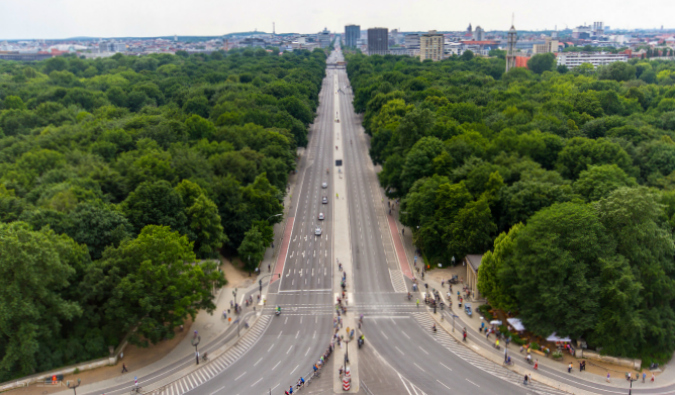
The greenery of Tiergarten in Mitte, a lush park in Berlin, Germany
Berlin’s central park is an excellent place to relax, walk, bike, and hang out. It’s one of the most beautiful city parks in all of Europe, in my opinion. There’s a war memorial for Russian soldiers, and you can also see the nearby Reichstag (Germany’s parliament) and famous Brandenburg Gate.

Checkpoint Charlie
Checkpoint Charlie, a famous statue and icon in Berlin, Germany
This is the infamous gateway between former East and West Berlin. There’s a reconstruction of the checkpoint here, complete with fake soldiers (and lots of tourists taking pictures). The nearby museum was created in 1963 by Rainer Hildebrandt. It has a lot of pictures, information, and video about people’s attempts to flee the East. A word of caution, though: the museum is really tiny, making it hard to maneuver around due to the big crowds. Avoid going mid-day and on the weekend.

Friedrichstraße 43-45, +49 30 2537250. The checkpoint itself is open every day and free to the public, while the museum is open daily from 9am-10pm. Admission to the museum is 14.50 EUR for adults, with discounts available for students and families.

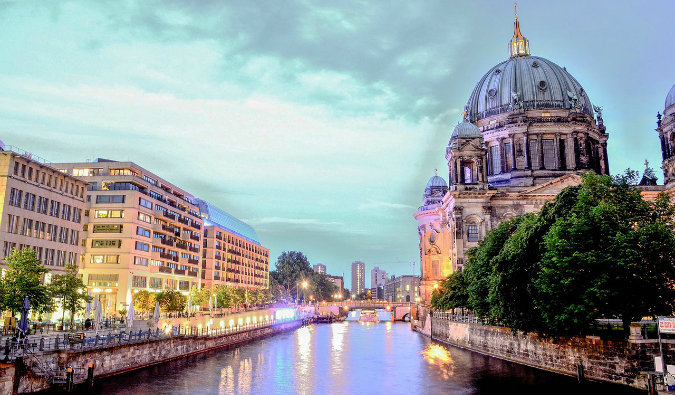
Take a boat tour
Amazing view of a boat ride on the water in Berlin, Germany
The Spree River flows through Berlin, and there are lots of canals and waterways on which you can take a boat tour. It’s quite relaxing on a warm day.

New Yorkstraat 3, +49 30 22414700, berlincitycruises.com. Cruise prices range from 18-70 EUR. 

Hang out on “the beach”
A great summertime activity involves hanging out on “the beach.” Various areas of the riverbank (especially across from the main train station) have “beach bars” where people lounge in beach chairs, drink beer, and soak up the sun.

The Dom
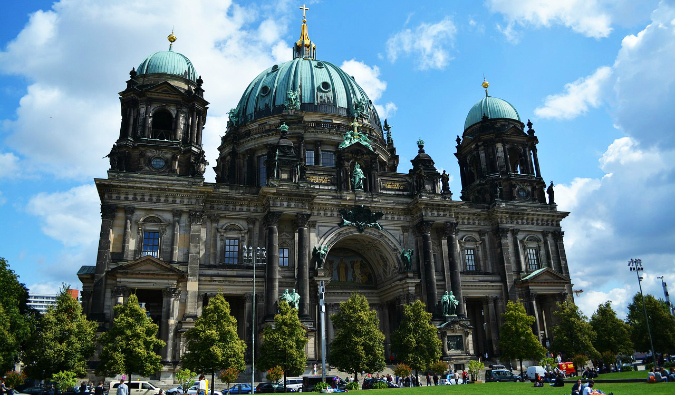
Photos of the massive building called The Dom in the city of Berlin
The biggest and most impressive cathedral in Berlin, The Dom was built at the turn of the 20th century as an expression of imperial power. It’s located next to the museum island in Mitte and you can climb to the top of the dome for a beautiful view over Berlin’s center.

Am Lustgarten, +49 30 20269136, berlinerdom.de. You can visit The Dom daily. Open from 9am-8pm on weekdays and 12pm-8pm on Sundays, though it is also closed during services and ceremonies. Admission is 7 EUR.

Topography of Terror
This open-air museum documents the terror and horror of the Nazi regime. The SS and the Reich Security Main Office were located on this spot. It also consists of excavated prison cells that were located under a remaining stretch of the Berlin Wall.

Niederkirchnerstraße 8, +49 30 2545090, topographie.de. Open daily from 10am-8pm. Admission is free.

***

In the end, I’m glad I came back to Berlin. I didn’t see what the fuss was about the first time, but after this visit, I enjoy Berlin more. It’s still ugly, but the art, the music, and the food make it an energetic and happening place to be. Though I may not ever live here, I’d happily go back and visit — over and over again.

Note: The city of Berlin gave me a tourism card that got me discounts at all these attractions as well as free transportation.

Book Your Trip to Berlin: Logistical Tips and Tricks

Book Your Flight
Find a cheap flight to Berlin by using Skyscanner or Momondo. They are my two favorite search engines. Start with Momondo.

Book Your Accommodation
My favorite places to stay in Berlin are St. Christopher’s Inn, Generator, and Wombat’s. To stay at another hostel in Berlin, book with Hostelworld. If you want to stay elsewhere, use Booking.com as they consistently return the cheapest rates. (Here’s the proof.)

Don’t Forget Travel Insurance
Travel insurance will protect you against illness, injury, theft, and cancellations. I never ever go on a trip without it. I’ve been using World Nomads for ten years. You should too.

Need Some Gear?
Check out our resource page for the best companies to use!

Want More Information on Berlin?
Be sure to visit our robust destination guide on Berlin for even more planning tips!


Photo credits: 6, 7

The post How to Conquer the City of Berlin: A Visitor’s Guide appeared first on Nomadic Matt's Travel Site.


July 17, 2018 at 06:06PM

fom https://ift.tt/2JtGruM
by IHholiday Travel trip