lunes, 2 de noviembre de 2020

NEW: Our NEW Monthly Book Club!

A man looking at a bookshelf in a library
Posted: 11/2/20 | November 2nd, 2020

Hey all! Just a quick post today about some exciting news:

We’re starting a virtual book club!

While we already have a monthly “book club” of sorts in which I send out suggested reads, starting this month, we’re going pick a particular book and then discuss through a virtual event on The Nomadic Network.

But here’s the kicker: the author is going to be part of our discussion!

One of the benefits of being a bad writer is that I know a lot of other writers.

And writers like talking about their books.

So, every month, I’m going to tap my writing network and we’re going to have an hour-long discussion with the author about their book.

The subjects of the books we choose will mostly be about travel but also touch on self-development, psychology, and entrepreneurship.

(The talks will be free but, since the authors are giving an hour of their time, we hope you’ll have bought and read their book!)

Our first book of the month kicks off with…..me!

We’re going to be reading Ten Years a Nomad. This book is about my ten years backpacking the world and the lessons I learned along the way. On the discussion call next month, I’ll talk about why I wrote it, the tons of versions it went through, and who I drew inspiration from. I’ll also take your questions on the book.

The talk will be on December 2nd at 12pm EST.

You can click here to register for the event. (It’s free!)

(Going forward, all our book club discussions will be the first Wednesday of every month.)

You can get the book online at the following places:

You can also find the book here:

And in Canada:

And in the UK and Australia:

However, if you are in the United States, I strongly encourage you to get the book from Bookshop, which ensures your book is ordered and shipped from an independent bookstore. No, more than ever, small bookstores need our support!

The team and I are super excited about this! We’ve already lined up authors for our next three events!!! I think having the authors discussing their books is something unique.

So that’s it!

Grab the book and I’ll see you on December 2nd!

If you have any questions, drop them in the comments.

– Matt

P.S. – You don’t need to buy the book to come to the talk. It’s open and free for all but I’m sure all the authors we’re going to have on would appreciate the support. 馃檪

Book Your Trip: Logistical Tips and Tricks

Book Your Flight
Find a cheap flight by using Skyscanner or Momondo. They are my two favorite search engines because they search websites and airlines around the globe so you always know no stone is left unturned.

Book Your Accommodation
You can book your hostel with Hostelworld. If you want to stay elsewhere, use Booking.com as they consistently return the cheapest rates for guesthouses and cheap hotels.

Don’t Forget Travel Insurance
Travel insurance will protect you against illness, injury, theft, and cancellations. It’s comprehensive protection in case anything goes wrong. I never go on a trip without it as I’ve had to use it many times in the past. I’ve been using World Nomads for ten years.

My favorite companies that offer the best service and value are:

Looking for the best companies to save money with?
Check out my resource page for the best companies to use when you travel! I list all the ones I use to save money when I travel — and I think will help you too!

The post NEW: Our NEW Monthly Book Club! appeared first on Nomadic Matt's Travel Site.


November 02, 2020 at 02:26PM

fom https://ift.tt/38bcYWe
by IHholiday Travel trip

lunes, 26 de octubre de 2020

What It’s Like Traveling as a Plus-Sized, Black Solo Female Traveler

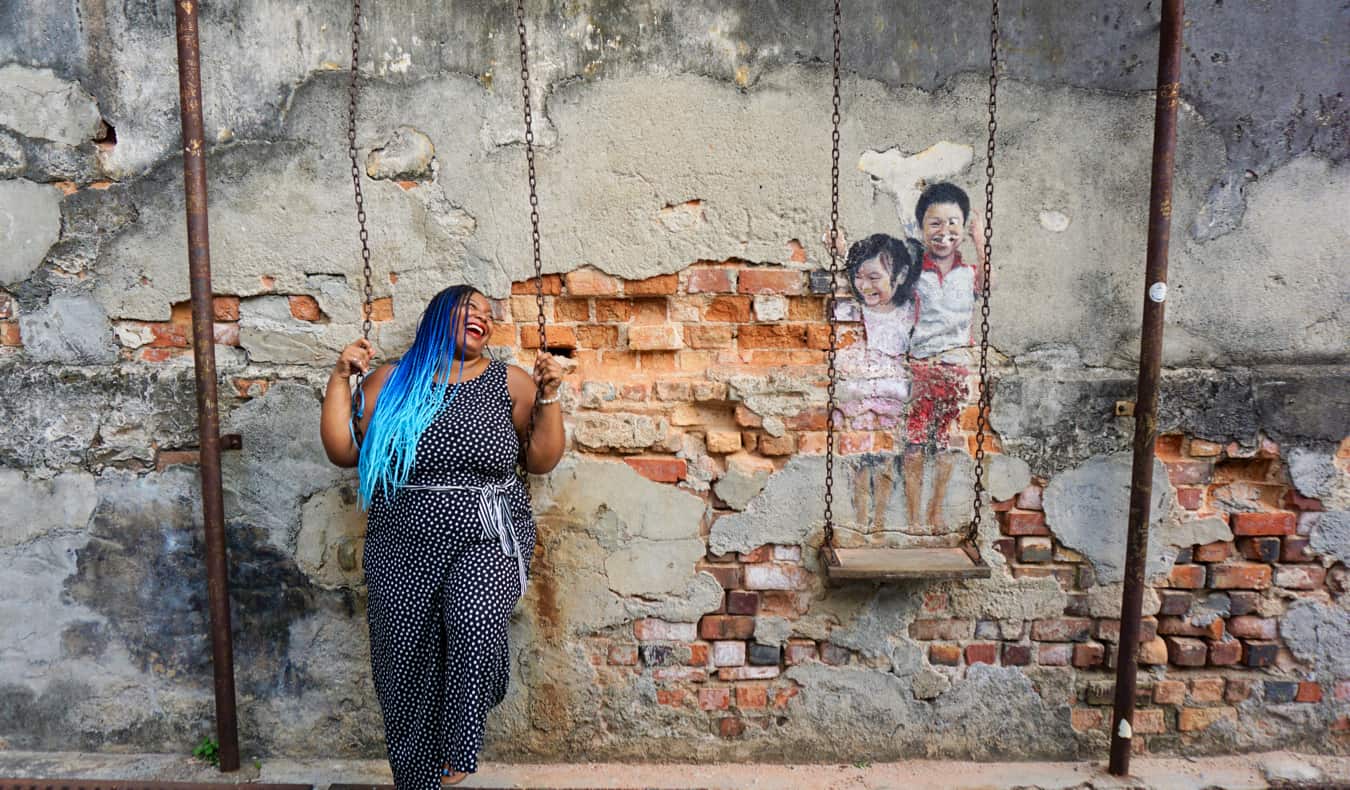
Annette posing near a mural in Penang
Posted: 10/26/2020 | October 26th, 2020

In this guest post, blogger and writer Annette Richmond shares her experiences and reflections as a plus-size black solo female traveler. I’ve known Annette for years and she an incredible person who has spoken at TravelCon on subjects relating to blogging and diversity. She’s one of my favorite humans and I’m stoked to have her writing for us today!

Every day, I learn more about intersectionality and how my identity as a fat Black woman impacts the way I travel. Intersectionality is a framework for conceptualizing a person, group of people, or social problem as affected by multiple forms of oppression. It takes into account people’s overlapping identities (age, race, sex, disability, religion, class, sexuality, appearance, etc.) and experiences in order to understand the complexity of prejudices they face.

We all have barriers to navigate and traveling the world solo has brought me face to face with many of mine. The discrimination I experience depends on where I am. When I’m in Asia, I’m discriminated against because of my size more than anything else while, in my home country of the United States, I’m discriminated against because of the color of my skin more than the size of my body.

I grew up in San Francisco as the oldest of three and only girl in a lower-middle-class, single-parent home. Family vacations weren’t a thing for us, but my best friend and her family would drive down to LA every year to go discount back-to-school shopping. In high school, I buckled up and went with them on the road trip — and I was hooked.

Senior year I was the only one in my group of friends that had saved enough money to go on a snowboarding trip to Bend, Oregon. I worked part-time in the shoe department of a major retailer, which meant commission. I saved up for months for that trip; to me, it was a celebration of my accomplishment as the first person in my family to graduate from high school.

That senior-year snowboarding trip was my first solo adventure. Since my friends decided not to go and it wasn’t planned by our school, I was one of the very few Black people there — it was mostly white teens from affluent families.

I was bunked in a two-bedroom apartment with three other girls. I remember having a great time. I also remember feeling different. Not only because I was Black but because I was bigger than the other girls.

And each of those things that make me me – gender, weight, and ethnicity – have all impacted how I travel.

Traveling alone as a woman can be risky (though not overwhelmingly more dangerous than being solo in San Francisco. Or any other big city for that matter). The reality is we need to be vigilant as we travel.

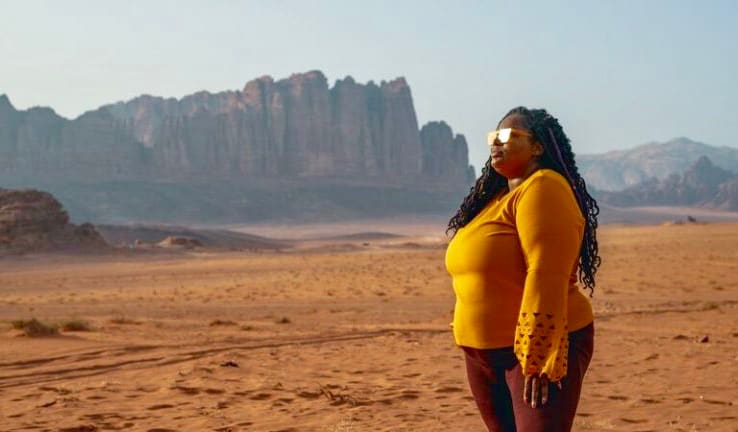
Annette in the Wadi Rum desert in Jordan

Once, I was walking with a friend one night in Phnom Penh, Cambodia, and saw a group of men on mototaxis waiting for customers. I felt them staring at us and heard them joking and giggling. As we passed by, one of the men grabbed my right breast. As I went to grab his hand, he sped off on his motorbike, leaving his friends to stare and laugh. I felt both humiliated and violated.

Another time, a man exposed himself and followed me in Kuala Lumpur, Malaysia. I heard someone making kissing noises behind me, and when I turned to look, an older Asian man was approaching me, asking “How much?” I shook my head no and quickened my pace. Soon I heard the kissy noises again; when I turned back to give him a disapproving look, I saw that he had unzipped his pants and was playing with himself in broad daylight. I was shocked and full of fear, but my first thought was to grab my pepper spray.

As he approached the stoplight, my pepper spray was in hand. I felt him approaching, then he stepped into the intersection and crossed on the red light. I was relieved that things didn’t escalate further and happy that I had brought my blinged-out pepper spray with me.

As a Black woman, there are the added issues that strangers will often come up to me and touch my hair or my skin, which I hate. A child even asked if I was made from chocolate! Some countries are more Black-friendly than others. But, in countries where citizens aren’t as exposed to black people, there’s a fascination that makes me feel like a prop.

For example, I had a group of Asian tourists line up to take photos with me at a pagoda in Myanmar. (Additionally, a European family took photos with me at the Louvre in Paris. They got my attention by yelling “Yo, yo, yo!”)

I generally agree to taking photos with people if I have time, feel cute, and am respected. However, I know it’s not my obligation to take photos with people who’ve never met a Black person before so it’s always interesting when they get upset with me for refusing to do so.

The intersecting lines quickly start to blur when it comes to being a Black woman, especially in Southeast Asia, where I’m thought of as either a celebrity or a prostitute. Walking through markets in Malaysia, Bali, and Bangkok, I’ve been called Nicki Minaj, Beyonc茅, and Oprah. (Do you think every old white man is called Trump or Biden while shopping in Asia?)

Then there’s my weight. I refused to wait to lose weight before I gave myself permission to see the world. This is me and I didn’t want to conform to any stereotypes of beauty. Although weight can be a barrier to travel, I’ve been able to come up with creative solutions and find tools to make it more accessible.

The first hurdle is the airplane. As a fat traveler, you have to determine if you’ll need to book one or more seats. If you do need more than one seat, have you budgeted for that? (Right now, the only US airline offering a free second seat for fat travelers is Southwest. Look into its Customer of Size Policy for details.)

I don’t generally need a second seat when flying, but depending on the airline, I might need a seat belt extender. On a flight to Bali, I was fighting to get my seat belt on, in the middle seat no less. The man in the window seat was watching me the entire time, growing more impatient by the second. Finally, he said, “That’s not going to fit,” to which I responded, “Can you please focus on yourself and let me focus on my seat belt?”

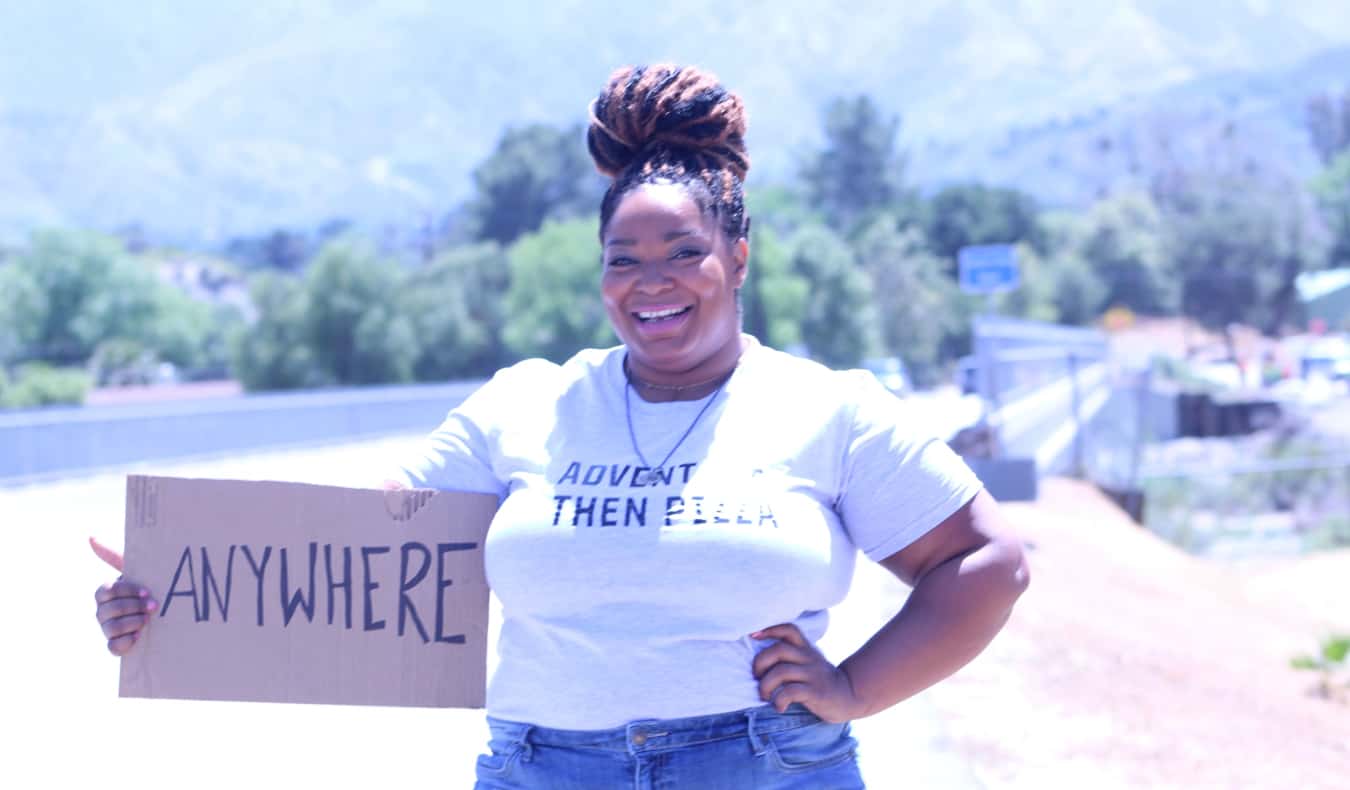
Annette posing while holding a hitchhiking sign

Two seconds later the seat belt clicked into place and the man next to me proceeded to take off his shoes and manspread.

Not many people know about the rules of the emergency exit row. One of them is that you’re not allowed to sit there if you’re using a seat belt extender. On a flight from Malaysia to Bangkok, I was given the window seat in an exit row.

As I was getting my headphones out and putting my gum away, I noticed the flight staff looking and pointing at me. Mind you, my seat belt was comfortably buckled without an extender, and my possessions were safely stowed above me. One of the flight attendants told me that it wasn’t safe for me to sit in the exit row and that I would have to move. I immediately knew that he had profiled me and assumed I was too fat to help in case of an emergency. Instead of getting into an argument or challenging his wrong assumption, I just moved to a window seat a few rows back.

As a fat traveler, there are so many more things to consider when planning a trip. If you’re doing water sports, is there a life vest that fits?

Planning on scuba diving? Is there a wetsuit in your size, or do you need to bring your own?

Did you know there’s a weight limit for horseback riding and zip-lining?

What’s the weight limit on the kayak you’re renting for the day?

All of these factors impact fat travelers, and not knowing the answers to these questions can lead to frustration and feelings of humiliation.

Something as simple as sitting down for dinner or eating in public can be anxiety-inducing for a fat traveler. Responses to fatness vary in different places; in Asia, it’s culturally acceptable to point, stare, and laugh at fat people. I don’t have to tell you how dehumanizing it feels to have strangers in a restaurant monitor everything you put in your mouth. It can sometimes be so overwhelming that it feels safer to order room service or get takeout.

On the other hand, one of my most memorable positive experiences was at a small stall-restaurant at Chatuchak Market in Bangkok. As I waited to be seated, the hostess made a hand gesture. She held her hands out wide, which I took as her saying that I was fat. I gave her a thumbs-up and waited to be seated. When she began seating people who had arrived after me, I got annoyed. I was on the verge of jumping ship when she walked over and grabbed a wooden chair that another customer had just gotten up from. She pulled it up to a table, called me over, and made the hand gesture again.

At that moment, I realized that she had waited to get me a more stable chair. She didn’t want me to risk the humiliation of sitting in one of the plastic chairs and breaking it. I will always be grateful for her kindness.

My intersecting identities as a fat Black woman impacts the way I view the world and how the world views me. Each day, I am challenging beliefs and smashing stereotypes, all while being as open and authentic as I can be. I have nothing to prove and no one to impress. Just more layers of my identity to be revealed.

Annette Richmond is an award-winning content creator, writer, advocate, and public speaker. She runs the blog From Annette With Love and is the creator of the body-positive travel community Fat Girls Traveling, the Editor-in-Chief of Fat Girls Guide, and the host of the annual fat positive Fat Camp. She’s also been featured in Conde Nast Traveler, Teen Vogue. NBC, Forbes. O Magazine, and more. You can follow her on Instagram as well.

Book Your Trip: Logistical Tips and Tricks

Book Your Flight
Find a cheap flight by using Skyscanner or Momondo. They are my two favorite search engines because they search websites and airlines around the globe so you always know no stone is left unturned.

Book Your Accommodation
You can book your hostel with Hostelworld. If you want to stay elsewhere, use Booking.com as they consistently return the cheapest rates for guesthouses and cheap hotels.

Don’t Forget Travel Insurance
Travel insurance will protect you against illness, injury, theft, and cancellations. It’s comprehensive protection in case anything goes wrong. I never go on a trip without it as I’ve had to use it many times in the past. I’ve been using World Nomads for ten years.

My favorite companies that offer the best service and value are:

Looking for the best companies to save money with?
Check out my resource page for the best companies to use when you travel! I list all the ones I use to save money when I travel — and I think will help you too!

The post What It’s Like Traveling as a Plus-Sized, Black Solo Female Traveler appeared first on Nomadic Matt's Travel Site.


October 26, 2020 at 11:32AM

fom https://ift.tt/3mmhFk3
by IHholiday Travel trip

jueves, 22 de octubre de 2020

Retirement Travel: How to Get the Most Out of Senior Travel

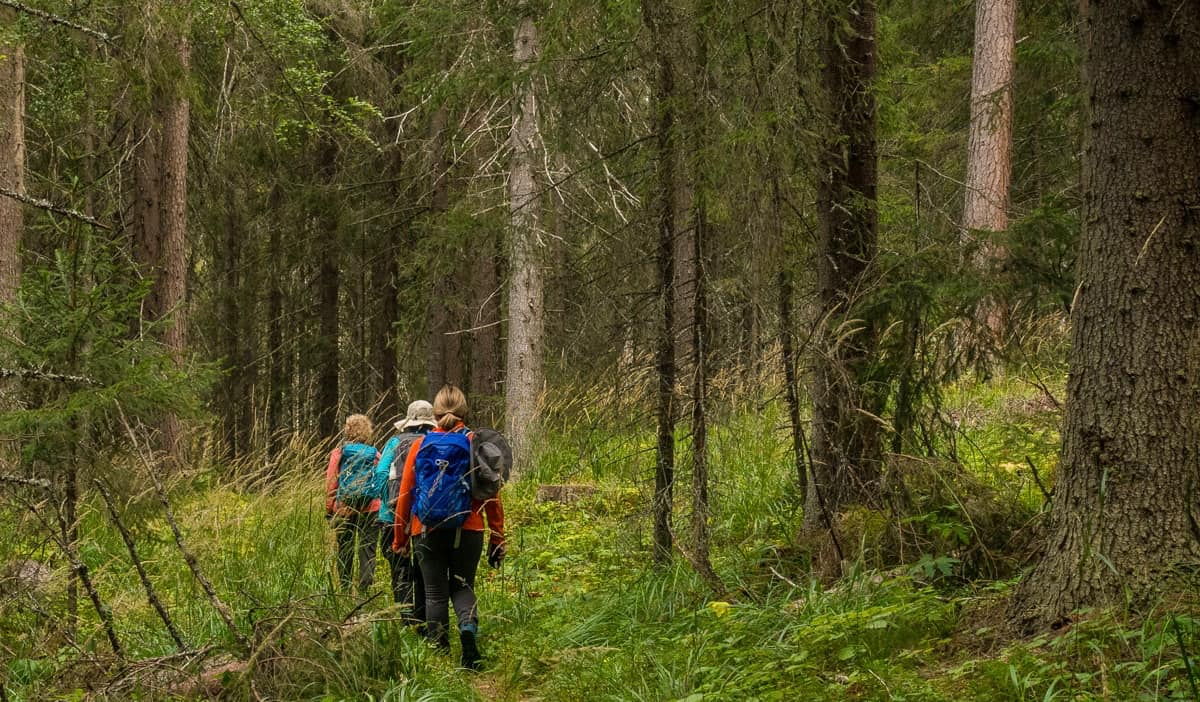
A group of retired seniors hiking in a forest
Posted: 10/22/2020 | October 22, 2020

Today’s guest post is from Kristin Henning. She and her husband Tom Bartel are perpetual travelers and publishers of the blog TravelPast50.com, where they discuss travel for older travelers looking to make the most out of retirement. Kristin is here to give her best tips on retirement travel (since I obviously don’t know much about this subject!).

Many hardworking people dream of the time when they’ll retire from their regular jobs and hit the road. For almost as many, the allure of travel is offset by the stress of planning and packing and leaving home for more than a few days.

Getting started can be especially difficult for senior travelers because of the “baggage” accumulated over a lifetime, including habits, pets, elderly parents, children and grandchildren, medical and other professional support networks, and assorted household stuff. Managing even a couple of months away can be complicated.

We were lucky to start our retirement travel early. We sold our house in 2010 and moved to South America, starting with a brief time teaching English. For the next ten years we traveled in almost every way imaginable: from months overseas to weekend trips in the USA; from road trips to bike trips to walking across Spain; from solo adventures to luxuriating together on a river cruise; from house-sitting to hotel-hopping.

We had no idea when we started out where this journey would take us, but before we knew it, we’d visited more than 70 countries on six continents!

We know such extensive travel isn’t for everyone. But the benefits of travel are available to anyone willing to take the leap and devote a month or two, at least, to exploring with interest and curiosity.

In any case, regarding retirement travel, we want to focus on using time and flexibility to your best advantage. Let’s replace the idea of a fully scheduled holiday — those plans you squeezed into your too-short paid vacation time — with the concept of independent, slower travel, because that’s when discoveries blossom. (Even if you do participate in a package holiday, we encourage you to surround the experience with additional weeks on your own to realize the rewards of independent travel.)
 

Why Seniors Love to Travel — and are Good At It

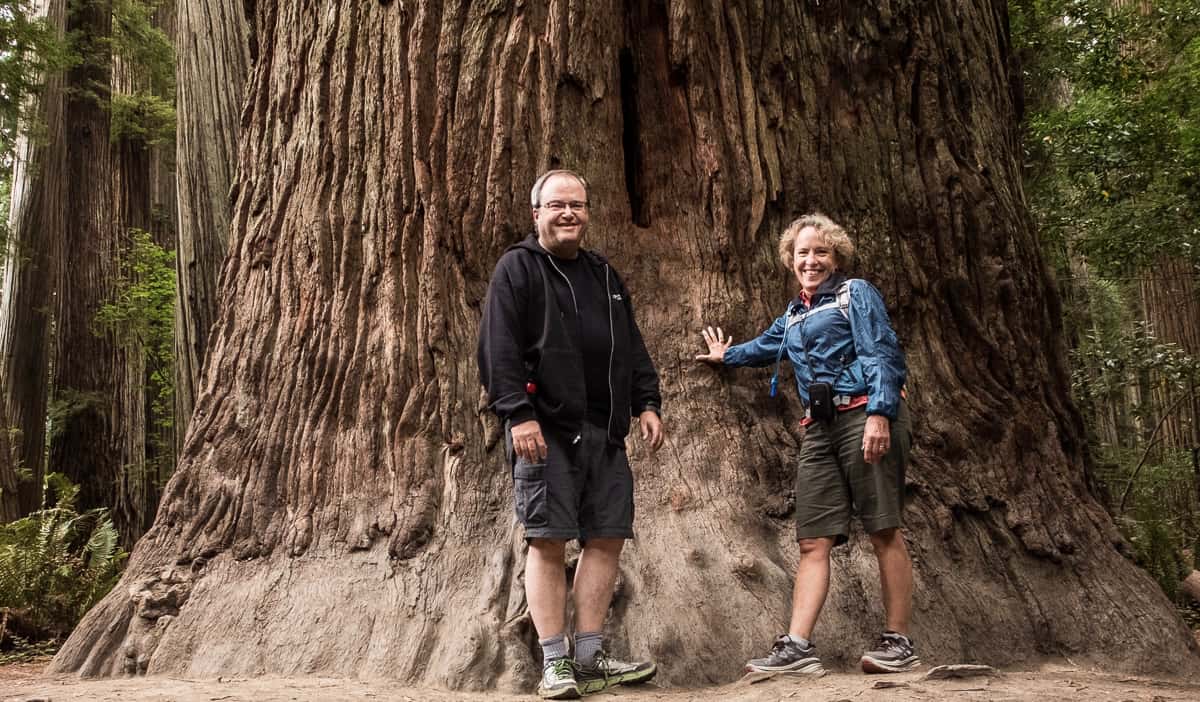
Tom and Kristin, two retired senior travels posing near a redwood tree
We older travelers have some great advantages. We have time to extend our trips, the freedom to focus on the present instead of a job back home, and a desire to make the most of our time, experiences, and relationships.

Following our noses and personal interests, we can pursue opportunities that pop up along the way. Unrushed, we can stop to ask questions or read a roadside marker; we can add a few days to our travels to detour to an unusual site; we can decide to linger longer in a favorite spot.

So, while acknowledging our logistical barriers — and the need to adapt to new pandemic-related travel protocols — let’s remember why travel still calls. Here’s why we keep on traveling, right into even older age!

1. Natural beauty: Discover diverse scenery and ecosystems
We love moving beyond our Great Plains roots to spend time in the mountains, to explore the deserts, to appreciate oceans and wetlands, and to view geological mysteries. The history of the Earth is long, and our time to witness all its glories and sunsets is short.

2. Historic context: Travelers love to learn
No matter where we travel, we’re likely to start our visit with historic sites and museums to gain perspective on the area’s cultural heritage. These experiences not only add meaning to travel but often steer us to the next destination (or detour!) in order to follow some thread of the story.

3. Healthy lifestyle: Travel for your health
Travel means more fresh air and exercise than we ever manage at home. The best of travel is active travel; walking in cities, hiking through national parks, and enjoying biking or water sports make for healthy bodies and engaged minds. Active travel also means you are that much closer to local people, as opposed to being escorted around by bus. Try it!

4. Food and culture: Find common concerns around the globe
Who can deny the joy of watching a festival, eating the best regional dishes, and enjoying the local wine? These are the windows into the culture of a community, and we travelers are lucky to sample the fare and recognize these common concerns and joys around the world.

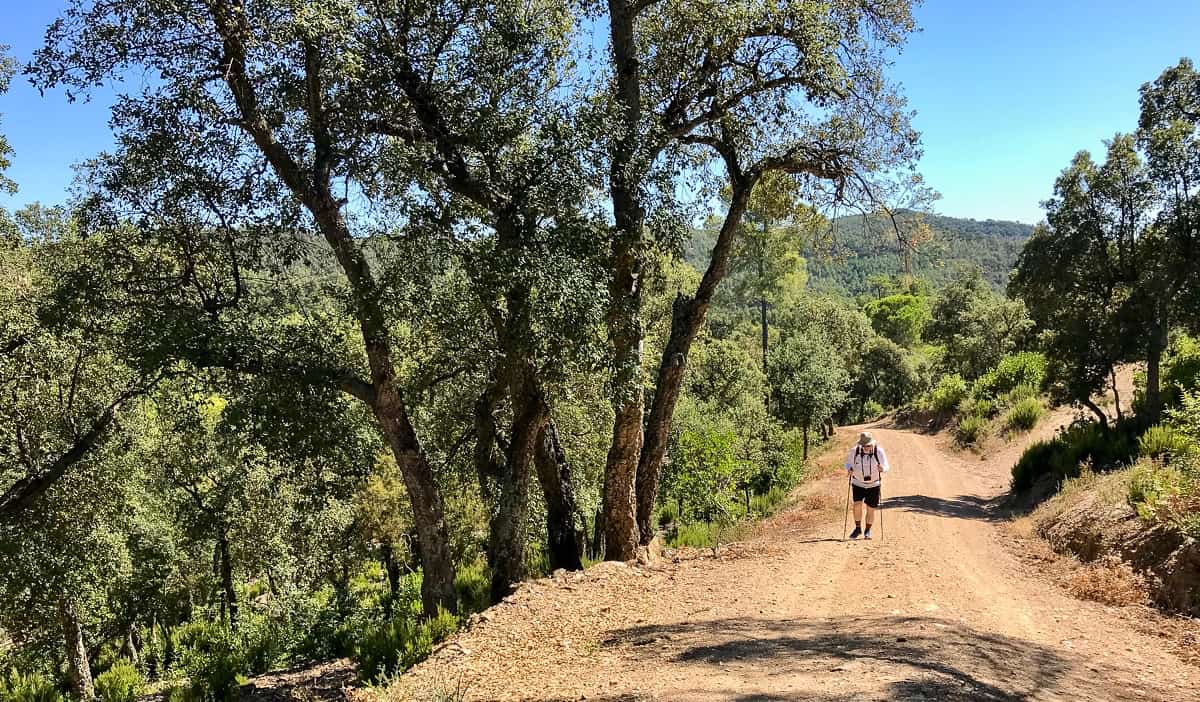
A retired senior hiking on a dirt road

5. Increased resilience and patience: Calm down and enjoy the present
Just because our children tell us we’re set in our ways doesn’t mean it’s true! Facing the unknown isn’t easy, but travel teaches patience and adaptability. Handling delays, changes, or adversity calls on us to solve problems and propose solutions. Problem-solving builds confidence, and confidence builds self-reliance, which in turn brings more joy to travel.

It’s also true that senior travelers aren’t afraid to take a day of rest. Sightseeing is most enjoyable at whatever pace one finds manageable.

6. Youthfulness: Surround yourself with all ages
Traveling helps us feel young and energized. Interest in exploration and discovery is ageless, and fellow travelers love to share tips and stories. It’s easy to strike up conversations with all sorts of people when you are abroad. We especially enjoy meeting young travelers and hearing about their homes and travels. Most are interested in hearing about us, too.

7. Simplify your life: Travel light
When you travel for an extended time and pack light, it becomes clear that joy comes from experiences more than things. Appreciate the lightness of living with only a roller bag and backpack for a few months and you’ll be inspired to declutter or downsize once you’re back home.
 

Prepare Now to Enjoy Travel Later

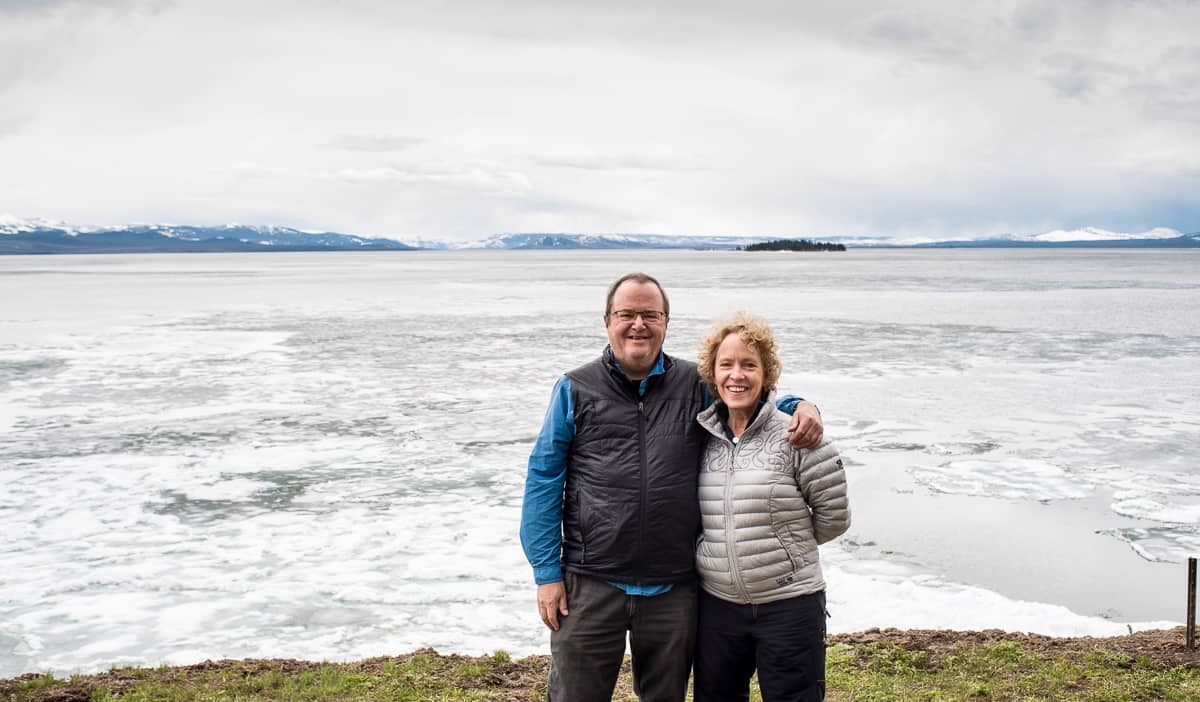
Tom and Kristin, two retired seniors posing near the ocean
With a little preparation, you’ll feel much easier about starting your retirement travels, whether that means several weeks on a road trip or a couple months overseas. Consider these tips to alleviate stress, to ready yourself for leaving home, and for more carefree travels.

1. Take steps to leave your home safe and sound

  • Install a Wi-Fi remote-controlled thermostat.
  • Consider a home security system to alert you of any opened doors or windows.
  • Go paperless: If you haven’t already, eliminate all paper mail, including bank and credit card statements, doctors’ and insurance bills, and Social Security mailings. A good paperless habit now means easier travel preparations to come.
  • Hold or forward mail: The US Postal Service will hold mail for up to 30 days. For longer trips, consider USPS Informed Delivery, or (as we did) forward your mail to a post office box accessible to a trusted family member or friend.
  • Arrange house and/or pet sitters: Relying on friends and family to check in on your house and pets may not be a realistic solution. Look into the array of options, whether boarding your pet, hiring someone to tend to your pet/plants/house regularly, or finding a live-in house sitter. Check out Trusted Housesitters or House Sitters America for example.
  • Sell or park your car: Avoid unnecessary auto expenses by storing your car and removing the insurance (except comprehensive) while it’s not being driven.

2. Prepare your online banking and travel credit cards

  • If you haven’t already switched to online banking, now is the time to free yourself for travel.
  • Check out PayPal and Venmo for settling up with friends, family, and small businesses instantly, from your phone.
  • Find a travel credit card that doesn’t charge a foreign transaction fee.
  • Know your credit card benefits. Know in advance, for example, which credit card you want to use to book a rental car so that you will realize built-in insurance benefits.
  • Advise credit card companies of your travel. Otherwise, when they see unusual activity in, say, Bolivia, they may freeze your account.
  • ATMs use debit cards, so know your PIN. Some services also require debit card transactions (versus credit). This is common in rail and metro systems.
  • Leave unnecessary credit cards and jewelry at home.
  • Carry and exchange minimal cash.

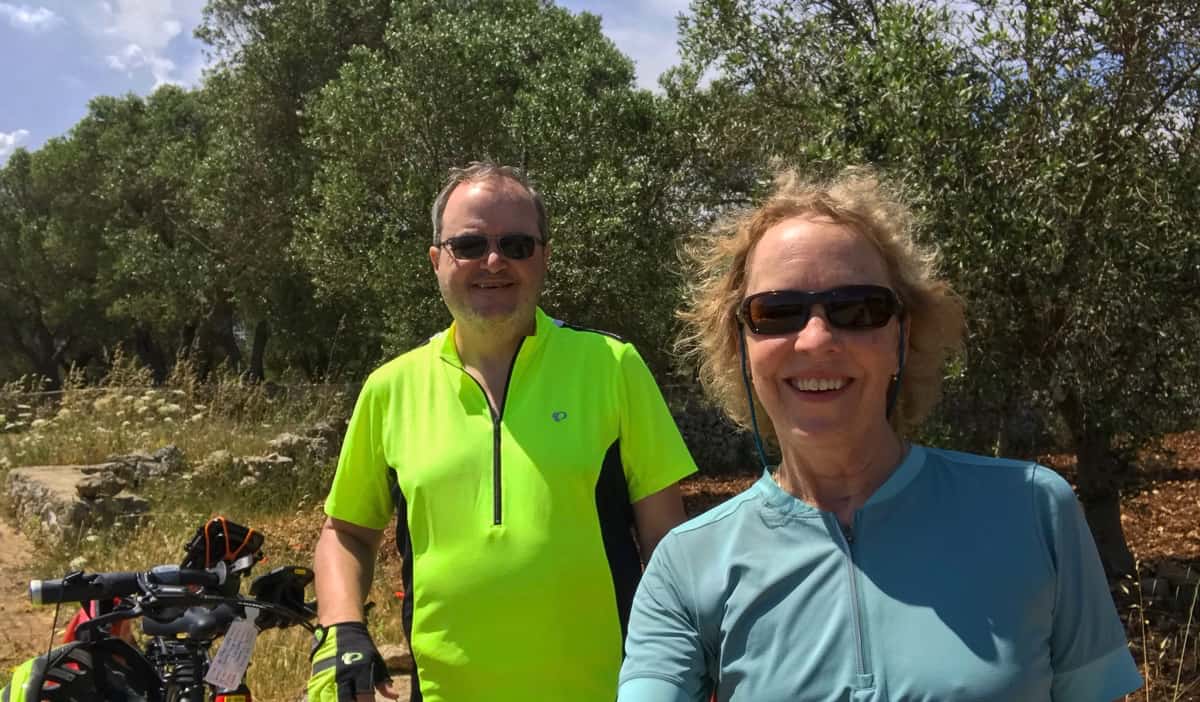
A retired couple cycling abroad

3. Tend to your travel health and wellness

  • No matter where you travel, it’s important to start out with a clean bill of health, or at least some knowledge of how to deal with particular health issues.
  • Prescriptions: With cooperation from your doctor and pharmacy, it’s possible to get more than 90 days of prescriptions filled at once.
  • Travel clinics: Visit your doctor or a travel clinic with your specific destination in mind. This is invaluable if immunizations are required for visas or entry, and a huge help for understanding potential diseases and dangers in certain regions of the world. Travel clinics may also help supply first aid items and medicines, such as antidiarrheal or antibiotic pills, or medicine to prevent altitude sickness or seasickness.
  • Pandemic and other global health updates: Do research the current conditions in your intended destination(s).
  • Travel insurance: Check out single-trip coverage or annual plans (if you travel three or more times a year, including domestic trips). A good travel insurance program for seniors will (a) allow the traveler to find an emergency room or medical care provider quickly, (b) provide for emergency evacuation as the medical condition or situation dictates, and (c) offer appropriate coverage with minimal prior approval requirements.

4. Mind your digital records and mobile communications

  • Eliminate headaches and having to put out fires back home by organizing your essential documents in digital format in advance.
  • Scan or photograph your passport and credit cards and know where to access these on your phone or computer (preferably both).
  • Update any travel-related apps, including those you might want in an emergency (banking, travel insurance, maps, and travel planners like TripIt or AAA).
  • Protect your various login usernames and passwords in a secure online place like 1Password.
  • Set up your phone plan according to your destination, time away, and need for connectivity. Options include everything from using Wi-Fi only as available (turning roaming off), getting a SIM card specifically for your destination country (recommended for long stays), or using your US phone plan. We’ve appreciated the ease of T-Mobile’s unlimited data plan, which is good in over 140 countries.
***

The reward for being prepared is great enjoyment of the moment, your travel moment. When we travel, we expect we’ll meet up with various challenges. But many of those challenges are the adventure stories that stick with us the longest. We’re proud of those times when we’ve been able to roll with the punches, adapt to the situation, and continue to enjoy the journey.

Senior travelers, we know, are as qualified as any to launch themselves into the unknown and fully appreciate the benefits of travel. May we all discover that travel experiences are part of our lives and character, not escapes from them.

Kristin Henning and her husband Tom Bartel are perpetual travelers and publishers of the blogs Travel Past 50 and MN Trips. They’re webistes are ruglarly fetured in major media and they often speak at travel events.

Book Your Trip: Logistical Tips and Tricks

Book Your Flight
Find a cheap flight by using Skyscanner or Momondo. They are my two favorite search engines because they search websites and airlines around the globe so you always know no stone is left unturned.

Book Your Accommodation
You can book your hostel with Hostelworld. If you want to stay elsewhere, use Booking.com as they consistently return the cheapest rates for guesthouses and cheap hotels.

Don’t Forget Travel Insurance
Travel insurance will protect you against illness, injury, theft, and cancellations. It’s comprehensive protection in case anything goes wrong. I never go on a trip without it as I’ve had to use it many times in the past. I’ve been using World Nomads for ten years.

My favorite companies that offer the best service and value are:

Looking for the best companies to save money with?
Check out my resource page for the best companies to use when you travel! I list all the ones I use to save money when I travel — and I think will help you too!

The post Retirement Travel: How to Get the Most Out of Senior Travel appeared first on Nomadic Matt's Travel Site.


October 22, 2020 at 02:31PM

fom https://ift.tt/3mdRrAg
by IHholiday Travel trip

lunes, 19 de octubre de 2020

The Lost Year: What Comes Next?

A photo of Nomadic Matt alone on a beach
Posted: 10/19/2020 | October 19th, 2020

When you look back at 2020, what do you think you’ll remember most about it?

For me, it will be the lost momentum.

When the year began, it looked like it would be the Year of Matt (take that, “Summer of George”!). TravelCon was gaining a reputation as a “must attend” event in the industry, this website was on track to have its best year yet, and I was finally going to build a life for myself in Austin: I joined social clubs, took cooking classes (and even one on gardening), and signed up for volunteering. I planned to date and was even thinking about buying a house later in the year.

Life was falling into place.

Then, COVID swept through the world and wrecked everything in its path.

Now, as 2020 takes its final lap, I’ve resigned myself to the fact that those plans from the start of the year won’t be realized. The pandemic still rages in America. Many businesses remain shuttered. Companies — especially in the travel space — are closing for good. There’s massive unemployment. Most of the world’s borders are sealed (especially to Americans). Plus, you also have wildfires, racial inequality, a looming Supreme Court battle, and an upcoming election. It’s a mess! This year’s been a shit show.

Unlike other countries that had full lockdowns and strong institutions to control their outbreaks, we had mixed messages from the start (we got 50 states and 50 diffierent policies.) and couldn’t even stay inside long enough to flatten the curve. Masks have become a political lightning rod that people are fighting and killing over (And example 3 and 4 of many).

And I heard “COVID is a hoax” enough on my road trip to make me realize too many this problem is here to stay. (And that was all before Trump got COVID!)

I don’t believe the United States is going to get COVID under control anytime soon. Like a fever that has to burn itself out, there’s nothing that can stop it at this point. It will just be wave after wave until it’s over.

Last month on my drive back to Austin, I began to ponder the remaining months of the year. What would I do with them? Could I salvage any of 2020?

Everything I want to do here in Austin is still closed (as it should be given the virus).

I fault no one for wanting to lock themselves inside until there is a vaccine.

And, when you have a family or are married or retired, it might be easier to stay home. You have others to lean on. Or maybe you have a house and space to spread out. You might even have a backyard!

But what if you live alone? Single? What if you were hoping this was the year you found love? What if you live in an apartment with no outdoor access? What happens when the loneliness becomes too much?

“COVID fatigue” is bound to set in.

And I am fatigued.

I know I have it much better than others. Millions are suffering much worse. I recognize how lucky I am to even have savings to draw upon to continue to support my business and keep my staff employed. I know I’m lucky to even have a job. I don’t have a brick-and-mortar business that requires rent. I was able to get a couple of loans to keep things going, I can still afford my apartment, and I don’t worry about my next meal.

But that doesn’t make my own struggles any less important to me. They don’t cause me less anxiety when I see my savings depleted, business not improving, and my social and dating life ground to a halt.

I mean what happens when the money is gone? What happens if TravelCon can’t take place in April?

The anxiety keeps me up at night.

When so many others refuse to do the right thing, it all seems so futile. Society only works when we work together. And it just feels like this country is coming apart and that all the sacrifices we made were for naught.

Everything feels hopeless right now. I’m just so mentally exhausted.

So, I’ve decided to take action.

Next month, I’m moving to Mexico for the winter. A few of my friends have moved there and I’ve decided to join them after the election.

I know it’s weird to want to move during a pandemic – and Mexico has its own problems – but, in many ways, it’s better than Texas.1 According to my friends, people wear masks more and the virus is taken more seriously.

And, while I still don’t plan to frequent massive gatherings or anything, if I’m going to be confined somewhere, I’d rather be confined in a more tropical setting, closer to the beach and the water.

As I said, I know others have it much worse than me. I count my blessings, but as I watch so much of what I built — professionally and personally — crumble (and as someone already prone to anxiety that once caused panic attacks), I need a mental break.

I don’t know how long I’ll stay there. Heck, by the time I plan to go, the world may have changed again. If 2020 has reinforced anything, it’s that a lot can happen in a day.

But I have a chance to end the year on a high note.

And I’m going to take it.

1 – I’ll get a COVID test before I go and then another after I arrive. I will wear a mask, avoid crowds, wash my hands all the time, and social-distance while there. A number of travel insurance companies now offer medical coverage related to COVID so I’ll be getting a policy that covers that too.

Book Your Trip: Logistical Tips and Tricks

Book Your Flight
Find a cheap flight by using Skyscanner or Momondo. They are my two favorite search engines because they search websites and airlines around the globe so you always know no stone is left unturned.

Book Your Accommodation
You can book your hostel with Hostelworld. If you want to stay elsewhere, use Booking.com as they consistently return the cheapest rates for guesthouses and cheap hotels.

Don’t Forget Travel Insurance
Travel insurance will protect you against illness, injury, theft, and cancellations. It’s comprehensive protection in case anything goes wrong. I never go on a trip without it as I’ve had to use it many times in the past. I’ve been using World Nomads for ten years.

My favorite companies that offer the best service and value are:

Looking for the best companies to save money with?
Check out my resource page for the best companies to use when you travel! I list all the ones I use to save money when I travel — and I think will help you too!

The post The Lost Year: What Comes Next? appeared first on Nomadic Matt's Travel Site.


October 19, 2020 at 02:00PM

fom https://ift.tt/3dFl3mP
by IHholiday Travel trip

s谩bado, 17 de octubre de 2020

10 Things to See and Do in Natchez, Mississippi


Posted: 10/17/2020 | October 17th, 2020

As the Southern cotton economy expanded on the back of slave labor in the early 1800s, towns emerged to transport the cotton on the Mississippi River. New Orleans, Memphis, Vicksburg, and Natchez are the four most famous of these towns.

Located high on the bluffs of the Mississippi River, Natchez, Mississippi, was established by French colonists in 1716. The defensible strategic location ensured that it would become a pivotal center for trade.

In the middle of the 19th century, the city attracted Southern planters, who built mansions to show off their vast wealth from the cotton and sugarcane trade. Natchez was where planters came to escape the heat and isolation of the plantations. It was the Hamptons of the South — the place where the rich relaxed and socialized.

I never heard of Natchez until a few weeks before I visited. While in Nashville, I met some local guys at a bar. Fascinated by my road trip plans, they gave me all the information they could on their home state of Mississippi. I mentioned my desire to see antebellum homes.

“That’s Natchez. If you want antebellum homes, Natchez is the place to be,” they agreed.

So I drove to Natchez, with its dozens of pre-Civil War antebellum homes. As a former history teacher who specialized in pre–Civil War America, I have a significant interest in this part of the country. I’m fascinated by the hypocrisy and duality of pre–Civil War Southern society.

On the one hand, it was genteel, polite, and formal. On the other, it was brutally racist. Southern egalitarian views of chivalry, equality, and honor extended only to a small segment of society and they found no hypocrisy in owning slaves, whom they brutalized to no end.

(Note: Reams of essays and books have delved into Southern culture. If you’re looking to learn more, check out Ken Burns’s The Civil War and The Fall of the House of Dixie: The Civil War and the Social Revolution That Transformed the South.)

Today, Natchez remains a beautiful city and many of the historic homes are still here. Secession sentiment never ran high here and the city quickly surrendered to the Union Army in 1862. Therefore, none of the destruction that took place in other cities occurred here.

Today, Natchez trades in tourism instead of cotton. Visitors to the historic homes, surrounding Natchez Traces, and gambling on the riverboats sustain this tiny town.

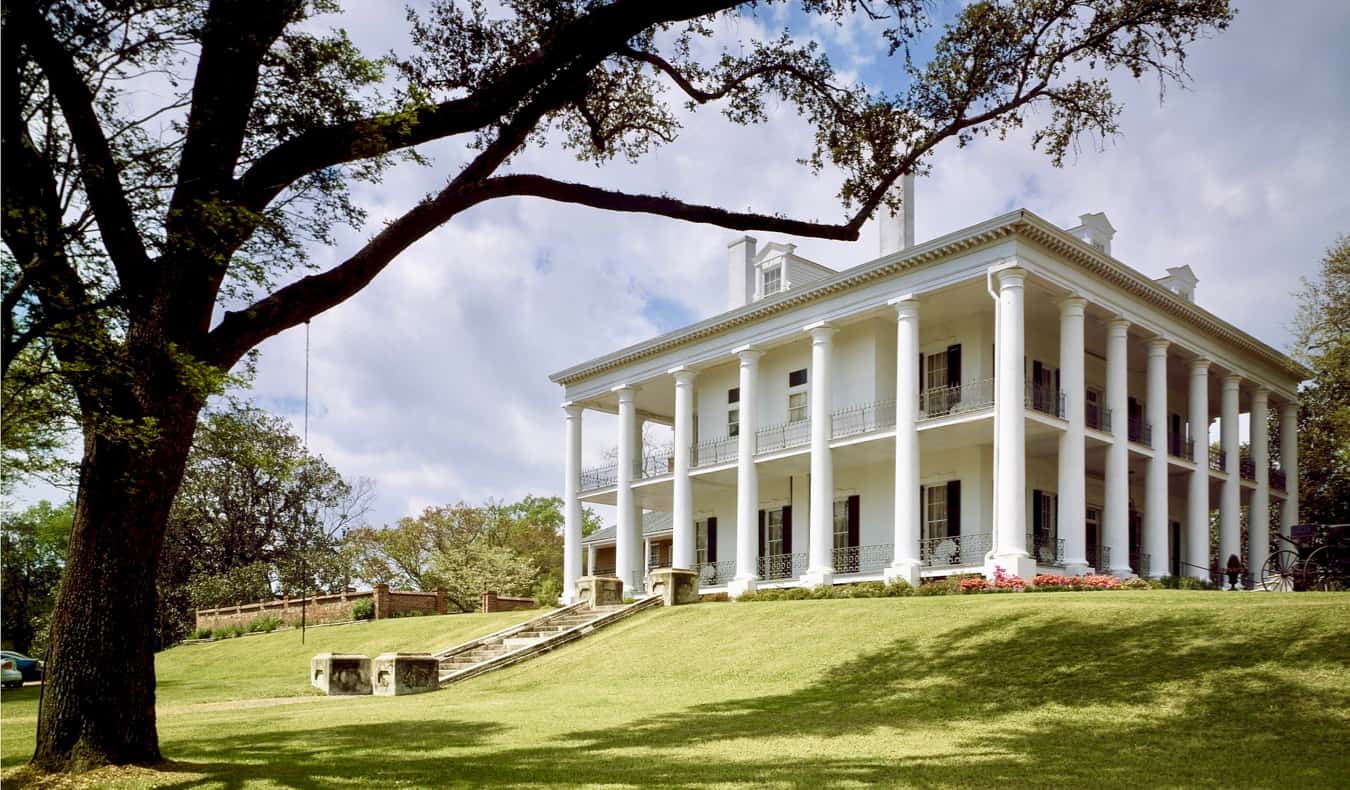
Huge home in Mississippi in the United States

But the old homes are the biggest draw.

By today’s standards, they are average suburban homes. You wouldn’t stop and think “Wow, that is a mansion!” But for the period, these homes were an ornate testament to the planters’ great wealth, with high ceilings, intricate wallpaper designs, and multiple stories. They were filled with fine china, exotic carpets, and expensive furniture.

There are over 20 homes here. I didn’t get to see them all, as many are private residencies. But I saw a lot – and the following are my favorite historic homes to visit in Natchez:
 

Longwood

Exterior view of grand estate mansion in Natchez
This was one of the most interesting of all the homes. It had stunning grounds and an incredible design featuring a huge onion-shaped dome. It’s the largest octagonal house in the United States and entirely unique.

Construction began in 1859, however, the owner died before most of the house was completed, leaving the entire upper floor unfinished (to this day, only a handful of the rooms are finished)

Today, it’s one of Natchez’s most popular homes and you’re free to tour the home and read about its history. Be sure to wander the grounds, too. They’re beautiful! Admission is $25 USD.
 

Rosalie Mansion

Elisa Rolle -https://commons.wikimedia.org/wiki/File:Rosalie_(Natchez,_Mississippi).JPG
I found this mansion to have the most beautiful interior of the handful of antebellum homes I visited. Built in 1823, its design was so popular that it inspired many other homeowners in the region to mimic its Greek Revival style.

The mansion was built for a wealthy cotton broker. In 1863, after the Battle of Vicksburg, General Grant commandeered the home to use as his headquarters. General Gresham, who commanded Union troops in the region after Grant, continued to use the mansion as his headquarters for the duration of the war. There are all kinds of historic artifacts and furniture inside from the 19th century too.

Today, the mansion is on the U.S. National Register of Historic Places and is an official U.S. National Historic Landmark. Admission is $20 USD.
 

Stanton Hall

Elisa Rolle -https://commons.wikimedia.org/wiki/File:Stanton_Hall.JPG
Stanton Hall and its grounds take up an entire city block. It had the prettiest grounds of all the homes I visited too. Built in the 1850s (for the paltry sum of $83,000 USD), the home is a replica of the original owner’s former home in Ireland. Knicknamed Belfast, the interior is incredibly elaborate, featuring Italian marble and glass chandeliers.

In 1890, the estate became home to Stanton College for Young Ladies. In 1940, it began its transition to a historic home and museum and is one the U.S. National Register of Historic Places as well as the U.S. National Historic Landmark list and the list of Mississippi Landmarks. Admission is $25 USD.
 

Melrose Mansion

Elisa Rolle -https://commons.wikimedia.org/wiki/File:Melrose_(Natchez,_Mississippi),_13.JPG
Built in the 1840s, this 15,000-square-foot mansion represents the peak of Greek Revival design. Designed by a local lawyer and landowner, the original furniture of the home is still in use today, having been passed down through the centuries with each successive sale of the house. Most of the furniture dates to the pre-Civil War era.

In the 1970s, the mansion was used for elaborate parties and events before being turned into a museum and historic site. Like many of the antebellum homes here, it’s on both the U.S. National Register of Historic Places and the U.S. National Historic Landmark list. Admission is $10 USD.
 

Other Things to See and Do

Bridge in Natchez at sunset with pink sky
In addition to the antebellum homes, there are a few other things to see and do in Natchez:

The Natchez Pilgrimage
During the Natchez Pilgrimage in the spring, all of the private historical homes open up to the public. The costumed guides — some descendants of the original owners — explain the history of the home, their family, and the region. It’s the city’s biggest annual event and there are some 20 homes on display.

Ghost Tours
In a town with so much tumultuous history — including wars and oppressive slavery — it’s no wonder that there are all kinds of eerie and unsettling tales to be found in Natchez. If you’re a fan of the paranormal (or just want to do something unique), try taking a ghost tour. Downtown Karla Brown offers ghost tours a few evenings each week for $25 USD. You’ll hear all about Natchez’s haunting and spooky tales and get to see a side of the city most tourists miss.

Magnolia Bluffs Casino
This casino is located on the Mississippi River in the town’s old mill. The mill opened in 1828 and operated until 1962, eventually being bought and turned into a casino. It’s small and a bit outdated, but they have plenty of slot machines and a few table games, and the views over the river are picturesque.

St. Mary’s Basilica
This church was built in 1842 and took over forty years to complete. While the exterior is a little plain, the elaborate interior is beautiful, with colorful stained glass, statues, and a spacious vaulted ceiling. The original organ from 1882 is still in use as well. It’s on the National Register of Historic Places.

The Emerald Mound
This sacred hill just looks like a flat, grassy pentagon. However, it was once a well-appointed holy site. Constructed sometime between the 13th and 17th centuries, it was an elevated place of worship for the Plaquemine Native Americans. Ceremonial stone structures used to sit on top of the mound, which is 65 feet tall, though it is empty today. All kinds of animal bones have been found nearby, leading researchers to believe it was the site of religious or sacred activity.

Visit the King’s Tavern
Visit the King’s Tavern, which was built in 1769 and is the oldest bar in the city (and, according to legend, the most haunted). After the Revolutionary War, it was used as an inn and tavern, as well as where the town’s mail was delivered. Until the development of the steamboat, the tavern relied on both coach drivers and outlaws who stopped by in between trips. When the invention of the steamboat made travel in the region safer, business dwindled and it was eventually sold. Today, it’s a farm-to-table restaurant.

For a map of the area and suggested sites to include on your self-guided tour, check out this free tour from Visit Natchez.

***

Natchez is beautiful and elegant. I loved strolling around the streets, marveling at the beautiful homes, stopping at King’s Tavern for wine while avoiding ghosts, and sitting in the park as the sunset over the Mississippi. It was the highlight of my trip to the state.

One downside to the city is that it’s expensive. There are very few Airbnb options and private rooms cost at least $95 USD per night. For a budget hotel, you’re looking at at least $60 USD per night. (Of course, if you want to splurge you can also stay in some of the historic homes here, as many have been converted into B&Bs. You’re looking at at least $150 USD per night for those.)

But, while accommodation is expensive, food and drinks are relatively cheap so you can balance it all out.

Natchez may not be a budget travel destination, but if you are looking to learn about American history, see beautiful homes, and visit a destination off the beaten path for most travelers (visitors here tend to be from the surrounding region), visit Natchez. You won’t be disappointed.

Book Your Trip to Natchez: Logistical Tips and Tricks

Book Your Flight
Find a cheap flight by using Skyscanner or Momondo. They are my two favorite search engines because they search websites and airlines around the globe so you always know no stone is left unturned.

Book Your Accommodation
You can book your hostel with Hostelworld. If you want to stay somewhere other than a hostel, use Booking.com as they consistently return the cheapest rates for guesthouses and cheap hotels.

Don’t Forget Travel Insurance
Travel insurance will protect you against illness, injury, theft, and cancellations. It’s comprehensive protection in case anything goes wrong. I never go on a trip without it as I’ve had to use it many times in the past. I’ve been using World Nomads for ten years. My favorite companies that offer the best service and value are:

Looking for the best companies to save money with?
Check out my resource page for the best companies to use when you travel! I list all the ones I use to save money when I travel – and I think will help you too!

Want more information on the United States?
Be sure to visit our robust destination guide on the USA for even more planning tips!

The post 10 Things to See and Do in Natchez, Mississippi appeared first on Nomadic Matt's Travel Site.


October 17, 2020 at 03:00PM

fom https://ift.tt/37sMm31
by IHholiday Travel trip

14 Things to See and Do in Portland, Oregon

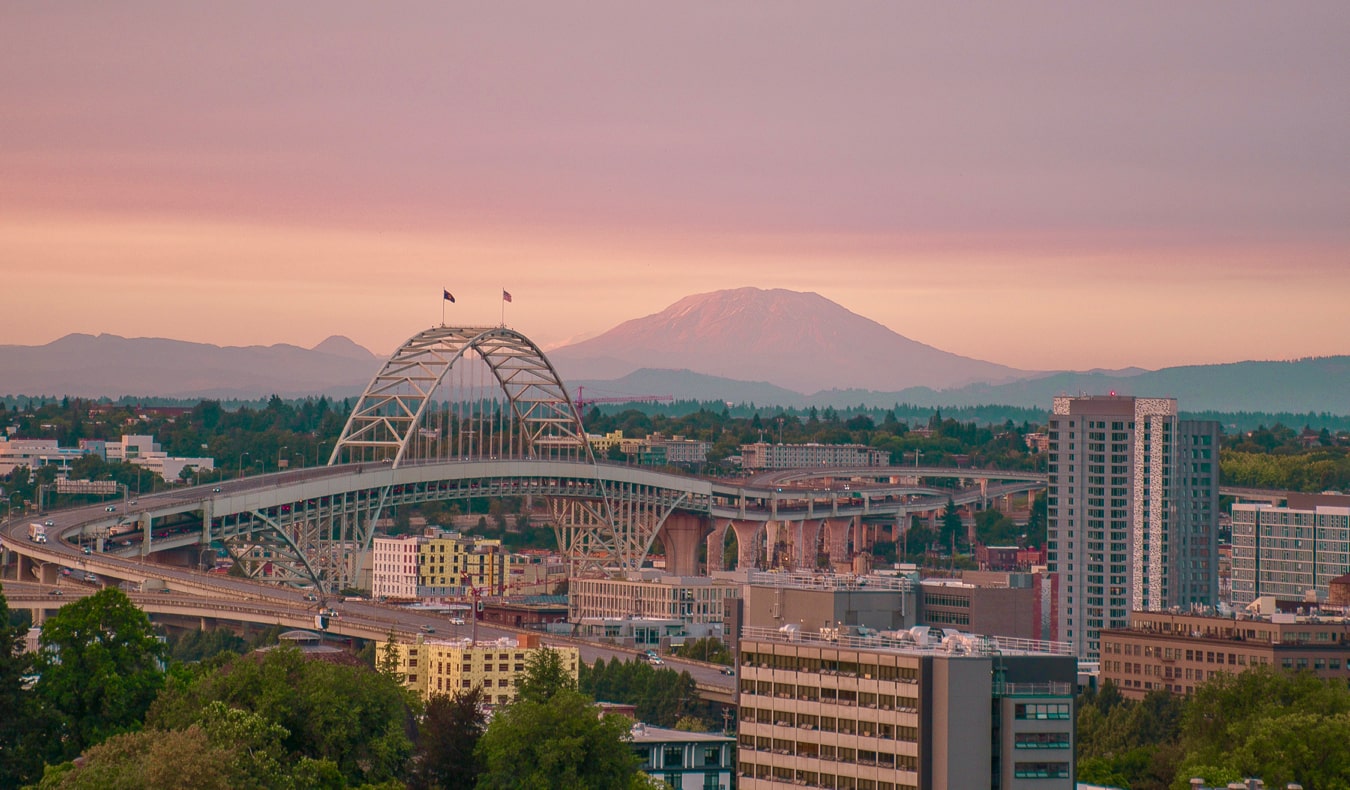
A colorful pink sunset over Portland, Oregon, USA
Posted: 10/17/2020 | October 17th, 2020

Portland, Oregon, is one of America’s most unique cities. While it often gets overshadowed by Seattle to the north, Portland is one of the US’s best and most interesting metropolises. With a world-class food scene, plentiful local breweries, and postcard-perfect scenery, it’s surprising that more people don’t visit this eclectic place.

Nicknamed “the City of Roses” (after roses became a common garden staple in the late 19th century) and “Stumptown” (due to lots of tree stumps remaining after the city expanded and clear-cut the surrounding area in the mid-19th century), Portland is known for its liberal tendencies, its food trucks, and its hipsters (thanks, Portlandia).

My first trip here was back in 2011 for Thanksgiving. While in Spain I made friends who lived in Portland and paid them a visit on my way to Asia. What started as “like” during my first trip turned into love on my second.

And, since then, I’ve visited nearly every year. Portland is on the very tiny list of cities I would actually live in.

What I really love about Portland is the high quality of life. It’s compact and easy to get around, there is good public transportation available, the locals are friendly, it’s environmentally friendly, and, most importantly, the food and beer scene here is killer (so many food trucks).

To help you make the most of your visit, here are my favorite 14 things to see and do in Portland:
 

1. Take a Walking Tour

I always start my visits to a new city with a walking tour. It’s the best way to learn about a destination, get the lay of the land, see the main sights, and have an expert local guide answer all your questions.

Portland Walking Tours offers more than half a dozen different tours around town, focusing on food, the main sights, and Portland’s underground and alternative culture. Tours last a couple hours and cost around $23 USD. They’re a great way to kick off your visit. I really liked the Underground Tour especially, which focuses on a series of tunnels below the city that have been used for all kinds of nefarious purposes.

If you’re on a budget, Secrets of Portlandia is a top-rated free walking tour that will give you a fun and informative intro to the City of Roses (they’re closed until 2021 due to COVID-19 though).
 

2. See Pittock Mansion

The stately Pittock Mansion in Portland, Oregon on a summer day
Built in 1914, this is a stunning French Renaissance–style mansion located in the western part of town. The 46-room estate, originally owned by a wealthy couple from England, is part of the National Register of Historic Places and contains beautiful artwork and furniture collected by the original owners. You can explore the grounds (which span over 40 acres) and buildings by yourself or take a guided tour (the price is the same; however, guided tours are only scheduled when volunteers are available).

3229 NW Pittock Dr, +1 503-823-3623, pittockmansion.org. Open daily 10am–4pm. Admission is $13 USD.
 

3. Hike Forest Park
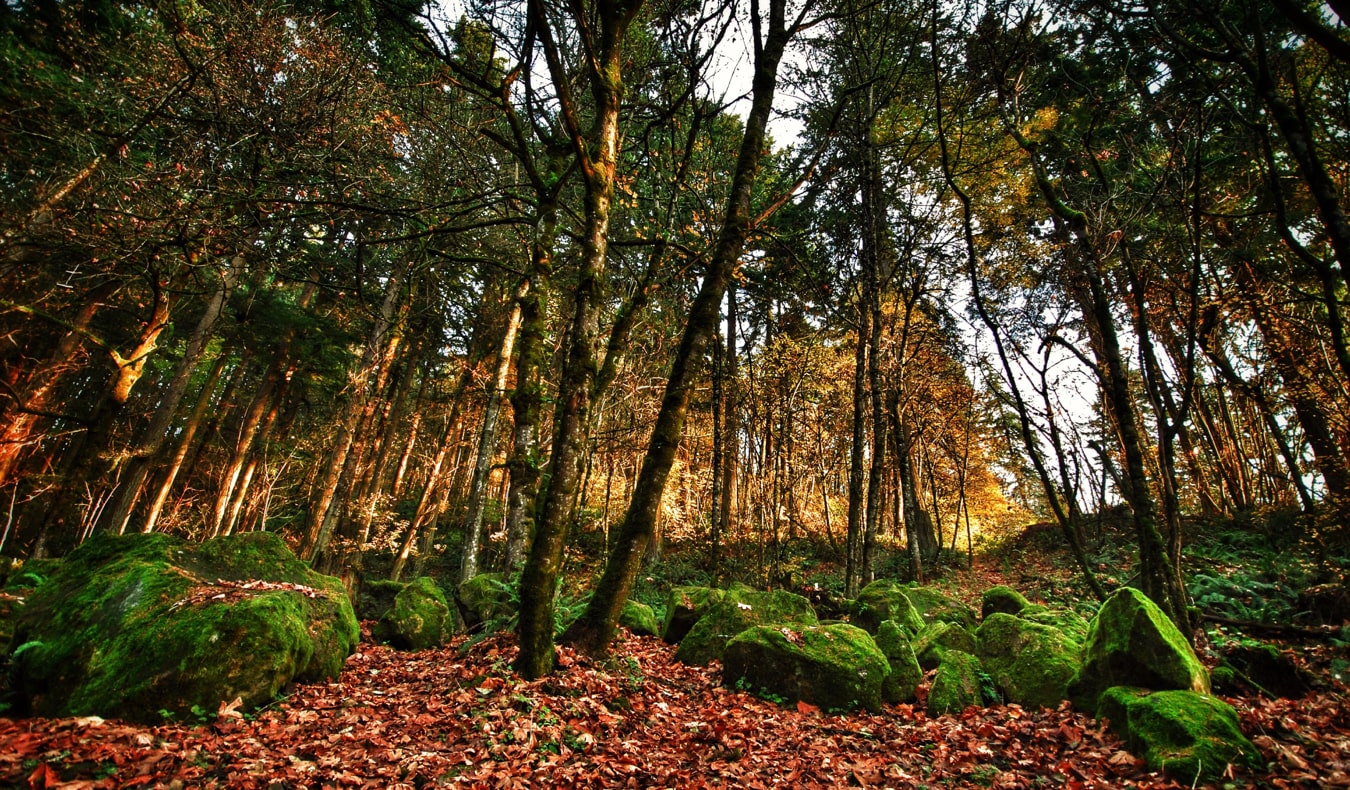
The lush greenery of Forest Park in Portland, Oregon
Forest Park is one of the nation’s largest urban parks. Covering a sprawling 5,000 acres, it’s home to over 70 miles of hiking and biking trails. There are over 100 species of birds here, as well as 62 different species of mammals. It’s also home to the Witch’s Castle, an abandoned stone building covered in moss. (It has no connection to witches. The name came from students who used to use the site for secret parties in the 1980s).
 

4. Browse at Powell’s City of Books

This is the largest independent and used bookstore in the world, home to over a million books. Established in 1971, it has 3,500 different sections and buys over 3,000 new and used books each and every day. If you’re a book lover like me, you could easily spend a good chunk of time here. There’s also a caf茅 (World Cup Coffee and Tea House), so you can grab a coffee or tea and cozy up with your new purchases.

1005 W Burnside St, +1 800-878-7323, powells.com/locations/powells-city-of-books. Open daily 9am–10pm.
 

5. Devour Delicious Donuts

Tasty donuts from Voodoo Doughnut in Portland, Oregon
Portland is known for its donuts. If you Google the city or search for it on social media, donuts will inevitably pop up. Voodoo Doughnut put the city on the map with its weird and wonderful combinations, such as Cap’n Crunch or maple bacon. It also makes cream-filled phallic donuts as well — so you can see why it’s become a quirky staple of the city.

Some locals might argue that Voodoo is for tourists, preferring donuts from Blue Star instead. You can’t go wrong with either choice. Why not try both and see for yourself. You only live once, after all!
 

6. Wander the International Rose Test Garden

Home to over 10,000 rose bushes and 650 varieties, this garden is where many companies test new varieties of roses (some are tested here years before they are commercially available). It’s the oldest rose test garden in the country. It also hosts an annual competition for the city’s best rose. The roses are in bloom between April and October, though there is also an amphitheater here that holds all kinds of events, such as classical music performances and plays. Don’t miss the Shakespeare Garden, which only has types of roses referenced in Shakespeare’s plays.

400 SW Kingston Ave, +1 503-823-3636. Open daily 5am–10pm. Admission is free.
 

7. See the Japanese Garden
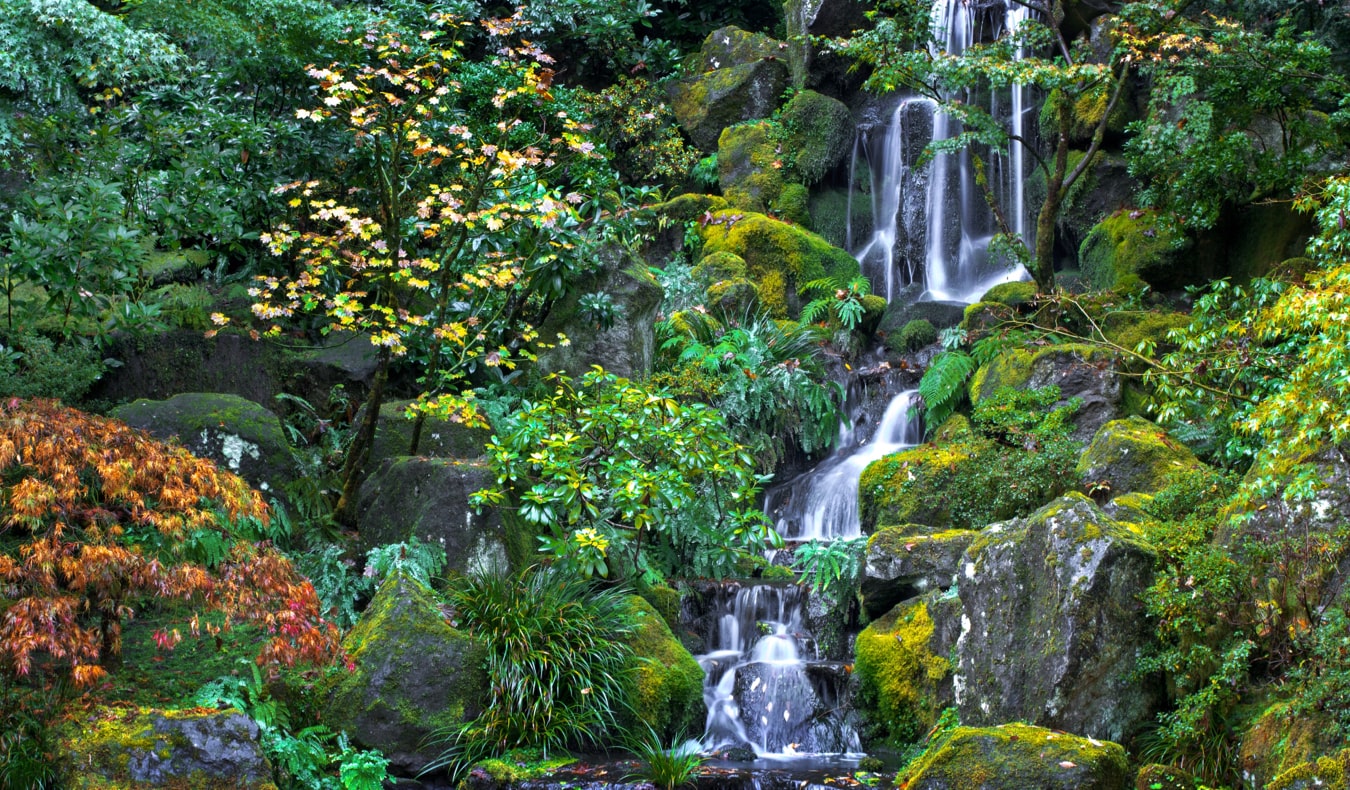
A beautiful waterfall in the Japanese Garden in Portland, Oregon
Located near the Rose Test Garden, these Japanese gardens were created in the 1960s as a symbol of peace between World War II adversaries. Today, it’s considered the best Japanese garden outside of Japan. Spanning 12 acres, it contains traditional gazebos, waterfalls, ponds, Zen sand gardens, and lots of walking paths. It’s super relaxing and serene and beautiful all year round, though it’s particularly stunning in the autumn when the leaves are changing. It receives no funding from the city, so it’s not cheap, but if you want to escape the city for a while, then it’s worth every penny.

611 SW Kingston Ave, +1 503-223-1321, japanesegarden.org. Open daily 10am–7pm (12pm–7pm on Mondays). Admission is $18.95 USD
 

8. Visit The Freakybutture Peculiarium and Museum

If you’re looking for something decidedly weird and unconventional during your trip, visit The Peculiarium. This creepy emporium is full of all kinds of weird drawings and souvenirs, gag toys, unknown oddities in jars, and even a giant Bigfoot statue. There are fake severed body parts (which are super lifelike), and they also serve fresh-baked cookies…with bugs, scorpions, and mealworms inside and on them.

The city’s slogan is “Keep Portland Weird.” This place reflects that perfectly.

2234 Northwest Thurman Street, +1 503-227-3164, peculiarium.com. Open Tuesday–Sunday 11am–7pm. Admission is $5 USD. Not suitable for kids.
 

9. Take a Food Tour

If you’re a foodie like me, you can’t visit Portland without taking a food tour. You’ll get to sample some of the city’s best food, learn about its culture and history, and meet other foodie travelers like yourself. It’s the best way to get the culinary lay of the land before you head off on your own to eat your way around town.

Forktown offers a few different food tours focused on different cuisines and regions of the city. It will give you a solid overview of what tasty offerings Stumptown can dish up.

Tours last around three hours and cost $89 USD per person.
 

10. Relax at Laurelhurst Park or Washington Park

Portland has tons of green space to relax in and enjoy. Laurelhurst Park was designed by the same team that designed Central Park in New York. It has a laid-back atmosphere and is popular with locals and visitors alike. There’s a duck pond, bike paths, and the off-leash dog area.

Washington Park is another great choice if you’re looking to lounge with a book and enjoy the weather. The park contains memorials for the Korean and Vietnam Wars, the Holocaust, and the Lewis and Clark expedition, and also offers beautiful vistas of Portland and Mt. Hood.
 

11. Indulge at the Food Trucks

A line of food trucks and street food stalls in Portland, Oregon
One of the most important elements of the Portland food scene is its food trucks. The food trucks are a huge part of the local culture, and you can find pretty much every cuisine and every price point too. There are over 600 food trucks in the city, and they’re usually gathered in small pods so you can sample a few different ones without having to go far.

You can find plenty of tasty options on Fifth Ave, Third Ave, and at the food pods (food truck lots) at Cartopia and Hawthorne Asylum. Some of my favorites are MF Tasty, Burger Stevens, Hapa PDX Ramen, and Desi PDX.
 

12. Visit the Portland Art Museum

Opened in 1892, this is the oldest art museum in the Pacific Northwest. It’s also one of the oldest galleries in the country too (the seventh oldest to be exact). It’s home to over 42,000 items, from contemporary art to Native American works to Asian art and everything in between. There are permanent exhibitions, rotating temporary galleries, and an outdoor sculpture park. There’s a lot of variety here, so be sure to check the website to see what’s on during your visit.

1219 SW Park Ave, +1 503-226-2811, portlandartmuseum.org. Open Tuesday–Sunday 10am–5pm (8pm on Thursdays and Fridays). Admission is $20 USD and free on the first Thursday of the month from 5pm to 8pm.
 

13. Drink Some Beer

Portland is one of the beer capitals of America. There are over 75 microbreweries in the city — more than any other city on earth — and Portlandians take their beer seriously. The craft beer movement started here back in the ’80s, well before it caught on elsewhere. Many breweries have their own tours, as well as their own restaurants, so you can enjoy a pint and a bite to eat. Many offer tours, and there are also multi-brewery tours from companies like City Brew Tours. If you’re a craft beer aficionado, be sure to indulge (responsibly).
 

14. Hike the Columbia River Gorge
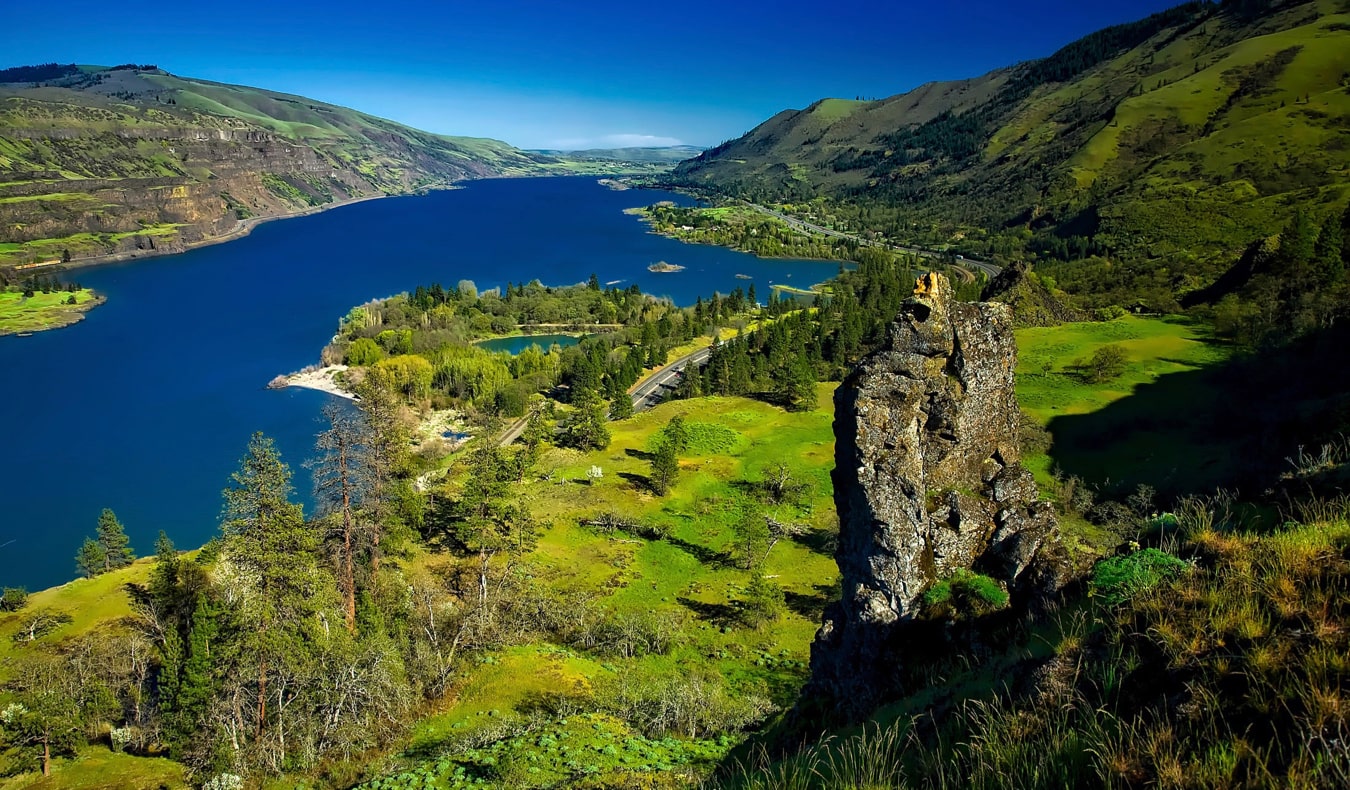
A scenic vista overlooking the Columbia River Gorge near Portland, Oregon
If you’re looking to get out of the city and stretch your legs, head to the Columbia River Gorge. Located east of the city, it is home to waterfalls, scenic vistas, and hiking trails. It’s the largest National Scenic Area in the country and makes for a nice place to spend a day. Oregon’s tallest waterfall, Multnomah Falls, can be found here, as well as a hundred-year old observatory that offers up views of the surrounding picturesque landscape.

Some suggested hikes are Dry Creek Falls (easy, 2 hours), Wahkenna Falls Loop (moderate, 3 hours), and Starvation Ridge and Warren Lake (hard, 8 hours). You can reach the gorge with a vehicle in around 30 minutes, but there’s also a daily shuttle for $20 USD (round trip) in case you don’t have a car.

***

Portland is one of my favorite American cities. It’s fun, eclectic, and energetic, and it has a lot to offer (especially if you’re a foodie or craft beer lover). It deserves far more attention than it gets — from domestic and international travelers alike. If you find yourself in the PNW, be sure to spend a few days here. Your tastebuds will thank you!

Book Your Trip to Portland: Logistical Tips and Tricks

Book Your Flight
Find a cheap flight by using Skyscanner or Momondo. They are my two favorite search engines, because they search websites and airlines around the globe, so you always know no stone is being left unturned.

Book Your Accommodation
You can book your hostel with Hostelworld, as it has the largest inventory. If you want to stay somewhere other than a hostel, use Booking.com, as it consistently returns the cheapest rates for guesthouses and hotels.

Don’t Forget Travel Insurance
Travel insurance will protect you against illness, injury, theft, and cancellations. It’s comprehensive protection in case anything goes wrong. I never go on a trip without it, as I’ve had to use it many times in the past. I’ve been using World Nomads for ten years. My favorite companies that offer the best service and value are:

Looking for the best companies to save money with?
Check out my resource page for the best companies to use when you travel! I list all the ones I use to save money when I travel — and I think they will save you time and money too!

Photo credits: 2 – A.Davey, 4 – jellybeanz, 6 – Jim Choate, 7 – Daderot

The post 14 Things to See and Do in Portland, Oregon appeared first on Nomadic Matt's Travel Site.


October 17, 2020 at 01:06PM

fom https://ift.tt/3k2vO5b
by IHholiday Travel trip